
Construction Equipment Buying Guide: New and Used Excavators, Loaders and Backhoes
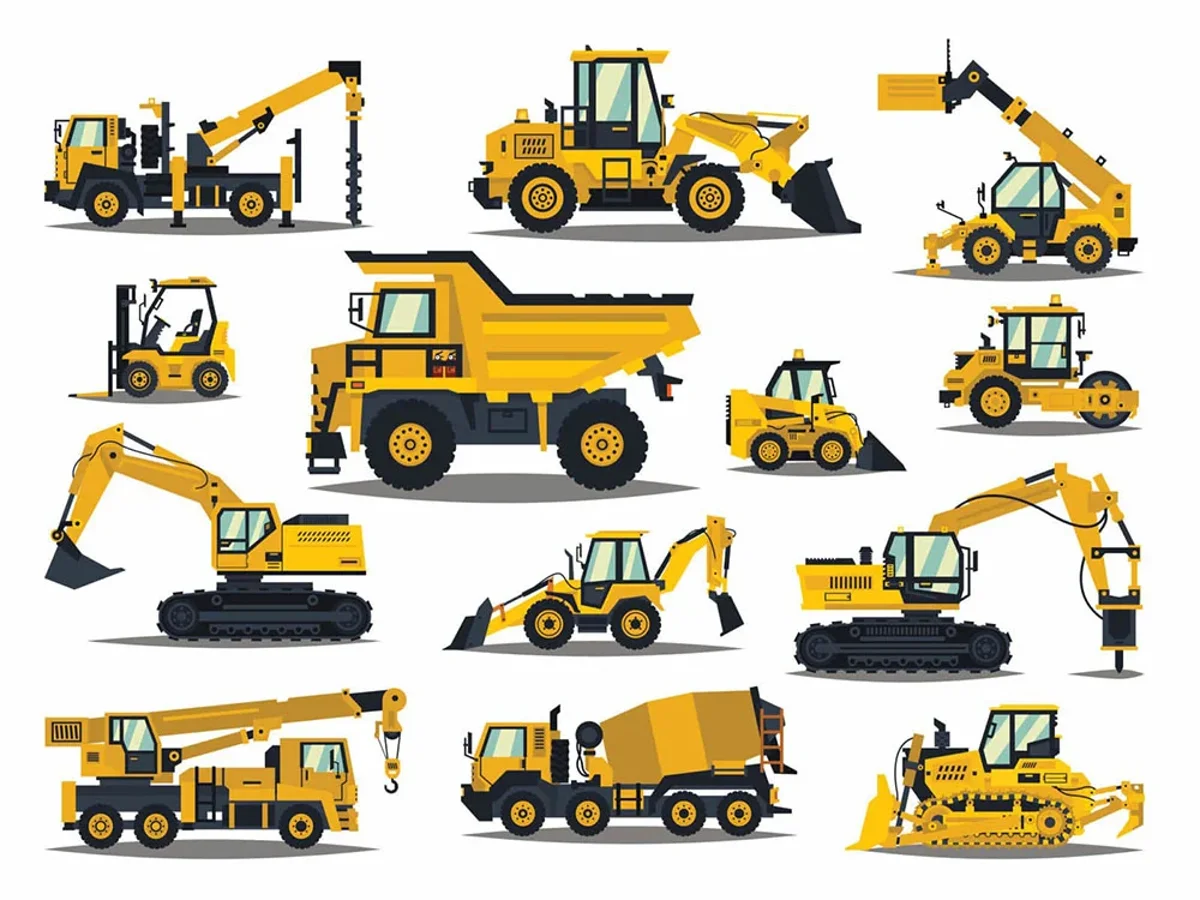
How to interpret hour meters, test hydraulic systems and measure undercarriage wear on construction equipment. Excavator, loader, backhoe and telehandler classes, a new-versus-used comparison and hourly cost items.
What decides a construction equipment purchase is whether the machine class fits the work and what condition the hydraulics are in. On a new machine, fuel burn, warranty and uptime lead the case; on a used one, hours, undercarriage wear and the work it has done.
Machine Class and Application Fit
Tracked excavators are built from 1.5 tonnes up to 100 tonnes. Urban infrastructure and trenching most often use the 13-22 tonne class, while bulk earthmoving and quarrying need 30-50 tonnes. Wheel loaders are classified by bucket volume: 1.5-2.5 m³ suits general site work, 3.5-6 m³ suits quarries and stockyards. Backhoe loaders remain the versatile machine of small and mid-size contractors because they dig and load. Telehandlers fill the gap between forklifts and cranes for lifting material to height.
Class and Capacity Table
| Machine | Class | Engine power | Fuel consumption | Economic life |
|---|---|---|---|---|
| Mini excavator | 1.5-6 t | 15-45 kW | 2-5 L/h | 8,000-10,000 hours |
| Tracked excavator | 13-22 t | 90-130 kW | 12-18 L/h | 10,000-15,000 hours |
| Large excavator | 30-50 t | 190-320 kW | 22-35 L/h | 12,000-18,000 hours |
| Wheel loader | 2.5-4 m³ bucket | 120-200 kW | 12-20 L/h | 12,000-15,000 hours |
| Backhoe loader | 7-9 t | 65-95 kW | 6-10 L/h | 10,000-12,000 hours |
Used Machine Inspection Checklist
- Read the hour meter and compare it with machine age; 1,200-2,000 hours a year is normal use. If wear does not match hours, treat the counter as suspect.
- Test the hydraulics: extend the boom fully with a load and hold for a minute; there should be no drift. Look for scoring and leaks on cylinder rods.
- Measure the undercarriage: chain, rollers, idlers and pads often represent a substantial share of machine value. Wear above 70 percent means a major cost.
- Start the engine cold and listen; changes in turbo note and blue exhaust smoke are warnings.
- Request oil analysis reports; metal particle counts in engine, hydraulic and transmission oil reveal wear.
- Look for old welds, cracks and straightening marks on the frame, boom and arm; boom repairs are a hidden risk.
- Read stored electronic fault codes; recurring faults signal a permanent problem.
- Assess attachment condition (breaker, buckets, grapple) and hydraulic circuit compatibility separately.
- Check documentation, import papers where relevant, and whether any lien is registered on the machine.
Caterpillar, Komatsu, Volvo CE, Hitachi, JCB, Liebherr, Hidromek and Çukurova all have wide service and parts coverage.
Hourly Cost Items
- Fuel: a 20 tonne excavator burns 12-18 litres per hour, which is 21,600-32,400 litres over 1,800 annual hours.
- Undercarriage: tracked machines need renewal every 4,000-6,000 hours, the second largest hourly cost item.
- Scheduled service: engine oil every 500 hours, hydraulic oil every 2,000 hours, hydraulic filters every 1,000 hours.
- Attachments and consumables: bucket teeth, breaker chisels and cutting edges are planned by application.
- Transport: budget lowbed moves between sites; suitable vehicles are listed under trucks and transport vehicles.
Attachment Selection and Hydraulic Matching
Attachments are the most important complement to a machine. Hydraulic breakers, crusher jaws, grading buckets, rock buckets, rippers and rotating grapples turn one carrier into several machines. But not every attachment fits every carrier: required flow and pressure must match the auxiliary hydraulic circuit of the machine.
The basic rule for breakers is that breaker weight should be about 8-12 percent of carrier weight. Heavier breakers create fatigue cracks in the boom and arm; lighter ones underperform in hard material. A quick coupler cuts changeover to minutes and delivers a real productivity gain on multi-task sites.
On a used machine, check whether the auxiliary hydraulic line was fitted at the factory or retrofitted. Retrofitted circuits frequently have undersized hoses, no return filter and incorrect pressure settings, which shortens attachment life and overheats the hydraulic oil.
New or Used?
For construction equipment, annual hours and the cost of downtime decide. Continuous multi-shift fleets favour new machines for fuel, warranty and uptime; contractors running under 800 hours a year use capital best with a well-kept used machine.
| Criterion | New machine | Used machine |
|---|---|---|
| Initial investment | High | Substantially lower |
| Lead time | 8-30 weeks after order | Usually 1-3 weeks |
| Warranty and service | Manufacturer warranty, commissioning included | Limited or dealer warranty |
| Technology and efficiency | Current emission class engine, machine control, telematics | One or two generations behind |
| Spare parts | Secured for many years | Depends on model age |
| Depreciation | Steep loss in the first years | Much slower value loss |
| Finance and leasing | Suits leasing and incentives | Limited, needs appraisal |
The clearest return on a new excavator is fuel and uptime; current hydraulic systems do the same work on fewer litres. 3D machine control systems improve grade accuracy and reduce survey and rework. Telematics tracks hours and service intervals remotely, and as the fleet grows that data makes maintenance cost predictable.
What to ask when buying new matters just as much as the used checklist:
- Lead time: the schedule from order confirmation to commissioning must be in writing.
- Warranty scope: duration, excluded parts and response time should be stated clearly.
- Service network: ask the distance to the nearest authorised service and its response time.
- Parts commitment: stock status and lead time for critical parts belong in the contract.
- Training and commissioning: confirm operator training and acceptance tests are included in the price.
Frequently Asked Questions
How many hours are acceptable on a used excavator?
With documented service history, 6,000-10,000 hours is the best balance of price and remaining life. Above 15,000 hours, engine, hydraulic pump and undercarriage overhauls are close and that cost belongs in your offer.
How do I test the hydraulic system?
Time boom, arm and bucket movements and compare against manufacturer figures. In a one-minute loaded hold test there should be no drift. Rapidly rising oil temperature and a high-pitched pump noise are classic signs of pump wear.
How do I assess undercarriage wear?
Measure chain pitch, roller diameter and pad height and compare with manufacturer limits. Excessive chain sag, leaking rollers and cracked pads indicate advanced wear. This single item represents a substantial cost.
Can I trust the hour meter?
Not on its own. Read it alongside cab wear, pedal and lever condition, undercarriage state and service records. Large inconsistencies between these indicators suggest the counter has been tampered with.
Rent or buy?
Below roughly 500 hours of annual use, renting is usually cheaper because it carries no fixed cost and no downtime risk. Above 1,000 hours of regular use, ownership lowers cost per hour significantly.
When is a new machine more economical?
Above 1,500 hours a year and across multiple shifts, fuel saving, warranty cover and low downtime put new machines ahead. For short projects and low utilisation, a used machine or rental fits better.
To compare new and used excavators, loaders, backhoes, rollers, cranes and access platforms, browse the construction machinery category and send your offer to the seller directly from the listing.