
Forestry and Grounds Maintenance Machinery Buying Guide: Harvesters, Forwarders and Chippers
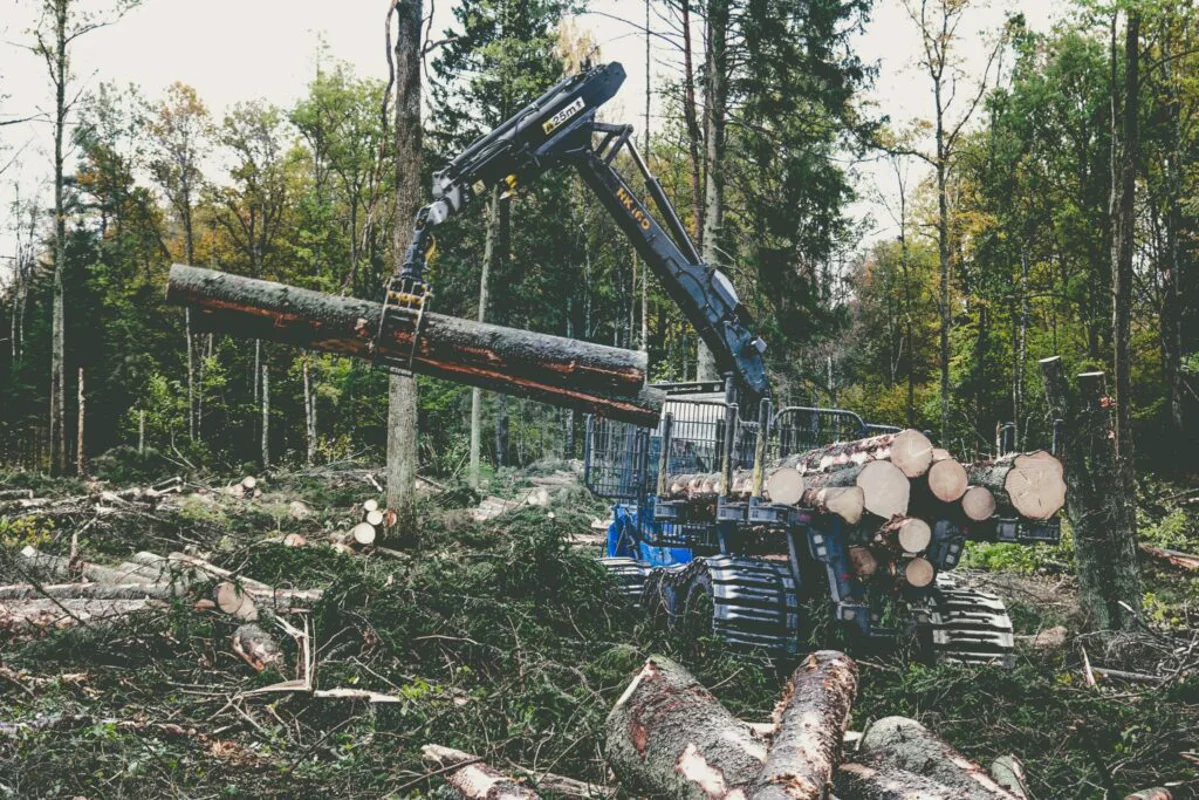
How to specify harvester cutting diameter, forwarder load capacity, chipper infeed opening and stump grinder power. Hour-meter assessment, hydraulic inspection, blade life, a new-versus-used comparison and hourly cost items.
Forestry machinery decisions follow terrain slope and tree diameter. The maximum diameter of the harvester head, the forwarder load capacity and the condition of the hydraulic system directly set hourly production, and therefore how quickly the investment pays back.
Forestry Machine Types
Modern harvesting is built on two machines: the harvester fells, delimbs and cross-cuts, and the forwarder carries the logs to the roadside. Harvesters are common in the 8-11 tonne class with heads rated for 45-75 cm diameter. Forwarders are built with 8-20 tonne load capacity, and smaller, better-balanced machines are preferred on slopes. Skidders drag logs instead of carrying them and remain a simpler, durable alternative.
Grounds Maintenance and Chipping
Wood chippers are classified by infeed opening: the 100-150 mm class suits garden and municipal work, while the 200-250 mm class serves commercial biomass production. Stump grinders range from 25 to 100 hp, with grinding depth and wheel diameter setting capacity. Forestry mulchers mount on excavators or tracked carriers for land clearing.
Capacity and Power Classes
| Machine | Capacity | Engine power | Critical wear | Service interval |
|---|---|---|---|---|
| Harvester (mid class) | 45-65 cm cutting diameter | 140-200 kW | Saw chain, feed rollers | Oil every 500 h |
| Forwarder | 10-15 t load | 120-180 kW | Crane pivot bushings | Oil every 500 h |
| Wood chipper (200 mm) | 15-40 m³/h chips | 60-130 kW | Blades 30-60 h | Weekly sharpening |
| Stump grinder | 40-60 cm depth | 25-75 kW | Teeth 20-40 h | Daily tooth check |
| Ride-on lawn tractor | 120-180 cm cutting width | 15-30 kW | Blades, belts | Oil every 100 h |
Used Forestry Machine Checklist
- Read the hour meter; 1,500-2,500 hours a year is normal, and above 15,000 hours a major overhaul is close.
- Check the hydraulic system for leaks, cracked hoses and oil temperature, and request an oil analysis report.
- Crane pivot bushing wear and weld cracks are the single most critical item.
- On harvester heads, test feed roller wear, saw motor performance and measuring system calibration.
- Look for old welds, deformation and corrosion on the frame and bogies.
- Measure track or tyre condition and chain wear; this item alone is a significant cost.
- On chippers, check blade seats, rotor balance and the hydraulic feed reversal system.
- Confirm fire extinguisher, guarding and safety equipment are complete.
John Deere, Ponsse, Komatsu Forest, Husqvarna, Stihl and Bandit are the manufacturers most commonly seen in this segment.
Hourly Cost Items
- Fuel: a harvester burns 12-20 litres per hour, a forwarder 8-14 litres.
- Chains and blades: saw chains are sharpened daily; chipper blades are sharpened or replaced every 30-60 hours.
- Hydraulic oil: consumption is high, and biodegradable oil is mandatory on some sites.
- Tracks and tyres: track life on difficult terrain runs 4,000-8,000 hours.
- Operator: harvester operation is a specialist skill; an experienced operator can lift output by around 30 percent.
For log haulage see trucks and transport vehicles, and for road building and site preparation see construction machinery.
Terrain, Operators and Safety
Half of a forestry machine decision is made by the terrain. On slopes above 30 percent, wheeled harvesters and forwarders give way to tracked carriers or cable-assisted systems. Where ground bearing capacity is poor, wide tyres, bogie tracks and low ground pressure take priority; otherwise the machine bogs down and does lasting damage to the forest floor.
The second criterion is tree diameter and species. The harvester head should cover about 90 percent of the stems on site; supporting the remaining 10 percent with a chainsaw is usually cheaper than buying a larger machine. Resinous species wear feed rollers and saw chains faster.
Safety equipment is not negotiable in this segment. Rollover protection (ROPS), falling object protection (FOPS), impact-rated cab glazing, fire suppression and emergency stops must all be present and functional. Operator visibility and camera systems raise both productivity and safety on tight, uneven sites. On a used machine, missing or removed safety equipment is a serious warning sign.
Maintenance records are what preserve residual value. In forestry machines, oil analysis history, hydraulic hose replacement dates and harvester head overhaul records directly affect the sale price. Asking for those records as a buyer, and keeping them as a seller, is one of the easiest returns available in this segment.
Seasonal usage also shapes the decision. For a stump grinder or chipper used only a few months a year, used is almost always the right call; for year-round operations, downtime cost tips the balance towards a new machine.
New or Used?
For forestry machines, site continuity and season length decide. Year-round operations favour new machines for uptime and fuel economy; seasonal contractors get capacity from used machines without tying up capital.
| Criterion | New machine | Used machine |
|---|---|---|
| Initial investment | High | Substantially lower |
| Lead time | 8-30 weeks after order | Usually 1-3 weeks |
| Warranty and service | Manufacturer warranty, commissioning included | Limited or dealer warranty |
| Technology and efficiency | Current emission class engine, measuring automation, telematics | One or two generations behind |
| Spare parts | Secured for many years | Depends on model age |
| Depreciation | Steep loss in the first years | Much slower value loss |
| Finance and leasing | Suits leasing and incentives | Limited, needs appraisal |
A new harvester optimises log valuation through measuring and bucking automation in the head, which raises the revenue taken from the same stand. Current emission class engines use fuel efficiently. Telematics logs production, fuel and fault data and makes maintenance planning predictive.
What to ask when buying new matters just as much as the used checklist:
- Lead time: the schedule from order confirmation to commissioning must be in writing.
- Warranty scope: duration, excluded parts and response time should be stated clearly.
- Service network: ask the distance to the nearest authorised service and its response time.
- Parts commitment: stock status and lead time for critical parts belong in the contract.
- Training and commissioning: confirm operator training and acceptance tests are included in the price.
Frequently Asked Questions
Harvester or skidder?
In regular plantations with medium-diameter trees, a harvester is several times more productive. On steep, mixed stands with large diameters, chainsaw felling with skidder extraction remains common and economical.
How do I size a wood chipper?
The infeed opening should be at least 25-50 mm larger than the thickest branch you will process. If you have an hourly chip target, note that a 200 mm class machine produces 15-40 m³ per hour depending on species and moisture.
What stump grinder power do I need?
For gardens and parks, 25-35 hp is enough. Large, hard stumps need 50-75 hp. Machines with less than 40 cm grinding depth often cannot clear the root system completely.
What is most critical on a used forwarder?
Fatigue cracks at crane and bogie connections. These points carry constantly varying loads and repairs are expensive. During inspection, load the crane fully extended and watch the connection points.
What machinery does biomass production need?
Roadside chipping needs a PTO-driven or self-powered chipper plus chip transport trailers. Chips stored above 30 percent moisture degrade, so drying and storage planning is part of the investment.
Should a seasonal operator buy new?
For a stump grinder or chipper used a few months a year, depreciation on a new machine is heavy. For year-round operations where downtime is lost revenue, the warranty and service advantages of a new machine become decisive.
To review new and used harvesters, forwarders, chippers, stump grinders and grounds maintenance equipment, browse the forestry and grounds maintenance machinery category.