
Forklift Buying Guide: New and Used Capacity, Battery and Mast Selection
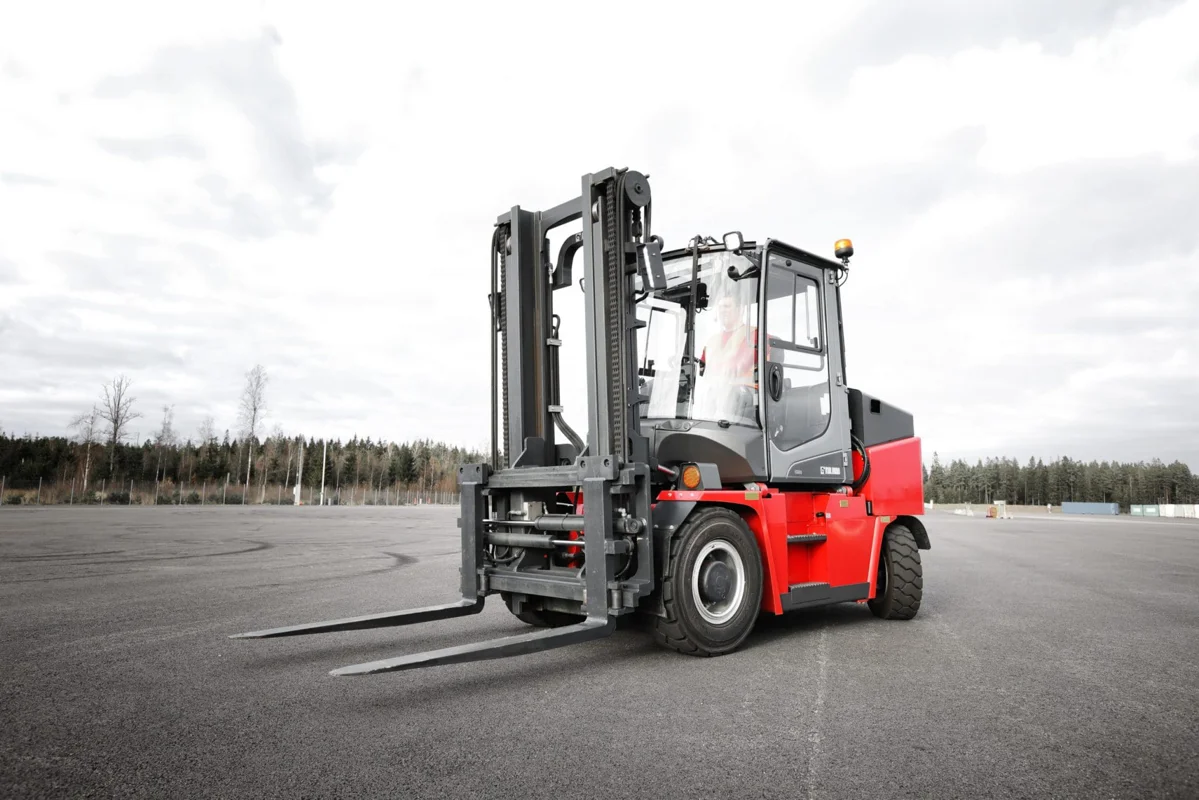
How to specify a forklift: rated capacity, load centre, mast height and energy type. Electric, diesel and LPG compared, plus battery life, a new-versus-used comparison, inspection checklists and the real running cost items.
Three figures decide a forklift purchase: the derated real capacity at your load centre, mast height and energy type. On a new truck you add warranty cover and battery technology to that list; on a used one, hour-meter reading and the battery manufacturing year.
Getting the Capacity Right
The 2,500 kg or 3,000 kg figure on a forklift nameplate applies to a standard 500 mm load centre and a standard mast height. Move the load centre to 600 mm or 700 mm, or raise the mast above 4,500 mm, and real capacity drops noticeably. That derating is printed on the load chart in the cab and must be read before purchase. Attachments such as fork extensions, rotators or clamps reduce capacity further.
Energy Type: Electric, Diesel and LPG Compared
For indoor work, electric trucks are effectively mandatory because there is no exhaust. Diesel trucks are stronger on open yards, ramps and uneven ground. LPG sits in between and can be used indoors for limited periods with adequate ventilation.
| Type | Common capacity | Energy use | Advantage | Limitation |
|---|---|---|---|---|
| Electric (48V / 80V) | 1.5-5 t | 4-9 kWh/h | Quiet, zero emission, low service | Charge time, battery cost |
| Diesel | 1.5-16 t | 2.5-5 L/h | High torque, outdoor duty | Exhaust, noise |
| LPG | 1.5-7 t | 2.5-4 kg/h | Fast bottle change | Bottle logistics, ventilation |
| Pallet truck (electric) | 1.5-3 t | 0.5-1.5 kWh/h | Narrow aisles, low cost | Transport only |
| Reach truck | 1.2-2.5 t | 3-6 kWh/h | 10-12 m rack height | Requires flat floor |
Battery Life and Charging Regime
Lead-acid traction batteries typically deliver 1,200-1,500 full charge-discharge cycles, which is about five years at one charge per day. Discharging beyond 80 percent, opportunity charging and neglecting water levels all shorten that materially. Lithium-ion packs offer 2,500-3,000 cycles and tolerate opportunity charging, which can win on total cost in multi-shift warehouses by removing the need for spare batteries and a change station. When buying a used electric truck, always ask for the battery manufacturing year and its last capacity test; battery replacement is often the largest single cost the truck will generate.
Used Forklift Inspection Checklist
- Read the hour meter. Indoor use of 800-1,500 hours a year is normal; above 15,000 hours a major overhaul is close.
- Measure mast chain elongation: 2-3 percent stretch means the chains must be replaced.
- Check fork heel thickness; more than 10 percent wear against original thickness condemns the fork.
- Look for leaks at lift cylinders and hoses; raise a load, hold it a minute and confirm there is no drift down.
- Test steering play, braking distance and parking brake hold on a slope.
- On electric trucks have each cell measured for specific gravity and voltage; spread between cells signals an ageing battery.
- Confirm the statutory periodic lifting equipment inspection report is current.
Trucks from Toyota, Linde, Jungheinrich, Still, Hyster-Yale and Crown have strong parts availability and hold their resale value well.
Running Cost Items
- Energy or fuel: a diesel truck working six hours a day can burn 4,500-7,500 litres of diesel a year.
- Tyres: cushion tyres last 2,500-4,000 hours, pneumatic tyres 1,500-3,000 hours depending on surface.
- Scheduled service: oil and filters every 250 hours, hydraulic inspection every 500 hours, statutory inspection annually.
- Operator: licensing and training are a legal requirement in most jurisdictions.
- Battery: budget a replacement roughly every five years on electric trucks.
Companies that also move material outdoors can review telehandlers and skid steers under construction machinery.
Warehouse Conditions and Matching the Right Truck
Forklift selection is driven as much by the building as by load and height. Aisle width comes first: a classic counterbalance truck needs 3.5-4 metres, a reach truck 2.7-3 metres, and a very narrow aisle stacker can work in 1.6-1.9 metres. Changing truck class without touching the racking often raises storage capacity by 20-30 percent.
Floor flatness is the second factor. In high-bay systems, once floor tolerance is exceeded, mast sway grows sharply above 8 metres and the operator has to slow down. Ramp gradient matters too; the climbing ability on the data sheet is usually the unladen figure and drops noticeably under load.
Cold store duty requires specific equipment: a heated cab, low-temperature hydraulic oil, electronics protected against condensation and a suitable battery. A standard truck fails quickly at minus 25 Celsius. Likewise, food and pharmaceutical warehouses call for leak-free design and food-grade lubricants. When buying used, always ask what environment the truck worked in.
New or Used?
For forklifts, daily running hours and the continuity the warehouse needs decide the case. A new truck brings warranty, current battery technology and low downtime risk; a used one is the right call for growing a fleet or keeping a spare on the same budget.
| Criterion | New machine | Used machine |
|---|---|---|
| Initial investment | High | Substantially lower |
| Lead time | 8-30 weeks after order | Usually 1-3 weeks |
| Warranty and service | Manufacturer warranty, commissioning included | Limited or dealer warranty |
| Technology and efficiency | Lithium-ion battery, fleet telematics, current safety equipment | One or two generations behind |
| Spare parts | Secured for many years | Depends on model age |
| Depreciation | Steep loss in the first years | Much slower value loss |
| Finance and leasing | Suits leasing and incentives | Limited, needs appraisal |
The clearest advantage of a new forklift is in the battery and electronics. Lithium-ion packs allow opportunity charging and remove the need for spare batteries and a change station. Current trucks come with fleet management features such as operator access control, speed limiting and impact detection, and that data measurably lowers accident and damage cost.
What to ask when buying new matters just as much as the used checklist:
- Lead time: the schedule from order confirmation to commissioning must be in writing.
- Warranty scope: duration, excluded parts and response time should be stated clearly.
- Service network: ask the distance to the nearest authorised service and its response time.
- Parts commitment: stock status and lead time for critical parts belong in the contract.
- Training and commissioning: confirm operator training and acceptance tests are included in the price.
Frequently Asked Questions
How many hours is acceptable on a used forklift?
For warehouse duty, trucks in the 6,000-10,000 hour range offer the best balance. Above 15,000 hours an engine, transmission or mast overhaul is near, and that cost should be factored into the offer you make.
Is electric or diesel cheaper to run?
Indoors and above roughly four hours of daily use, electric trucks are usually cheaper thanks to lower energy and maintenance costs. On open, muddy ground and with heavy loads, diesel wins on both power and cost per tonne moved.
How do I choose the mast type?
Duplex masts reach 3,300-4,500 mm and triplex masts 4,500-7,000 mm. If you work under a low door header or inside containers, choose a full free-lift triplex, otherwise the truck simply will not fit through the opening.
Is annual inspection mandatory?
Lifting and material handling equipment must be examined at least annually by a competent person under work equipment regulations. Operating without a current report creates serious liability in the event of an accident.
What does load centre mean?
Load centre is the horizontal distance from the fork face to the centre of gravity of the load. The standard reference is 500 mm. As the load centre increases, the tipping moment grows and the truck real safe capacity falls.
New or used when renewing a fleet?
For core trucks working more than six hours a day, new is usually cheaper thanks to uptime and battery performance. For spares and seasonal peaks, used trucks add capacity without tying up capital. Most warehouses run both together.
To compare new and used electric, diesel and LPG forklifts, pallet trucks and reach trucks, browse the forklifts and material handling category.