
Industrial Electrical Equipment Selection Guide: Transformers, MV Switchgear, Panels and Motors
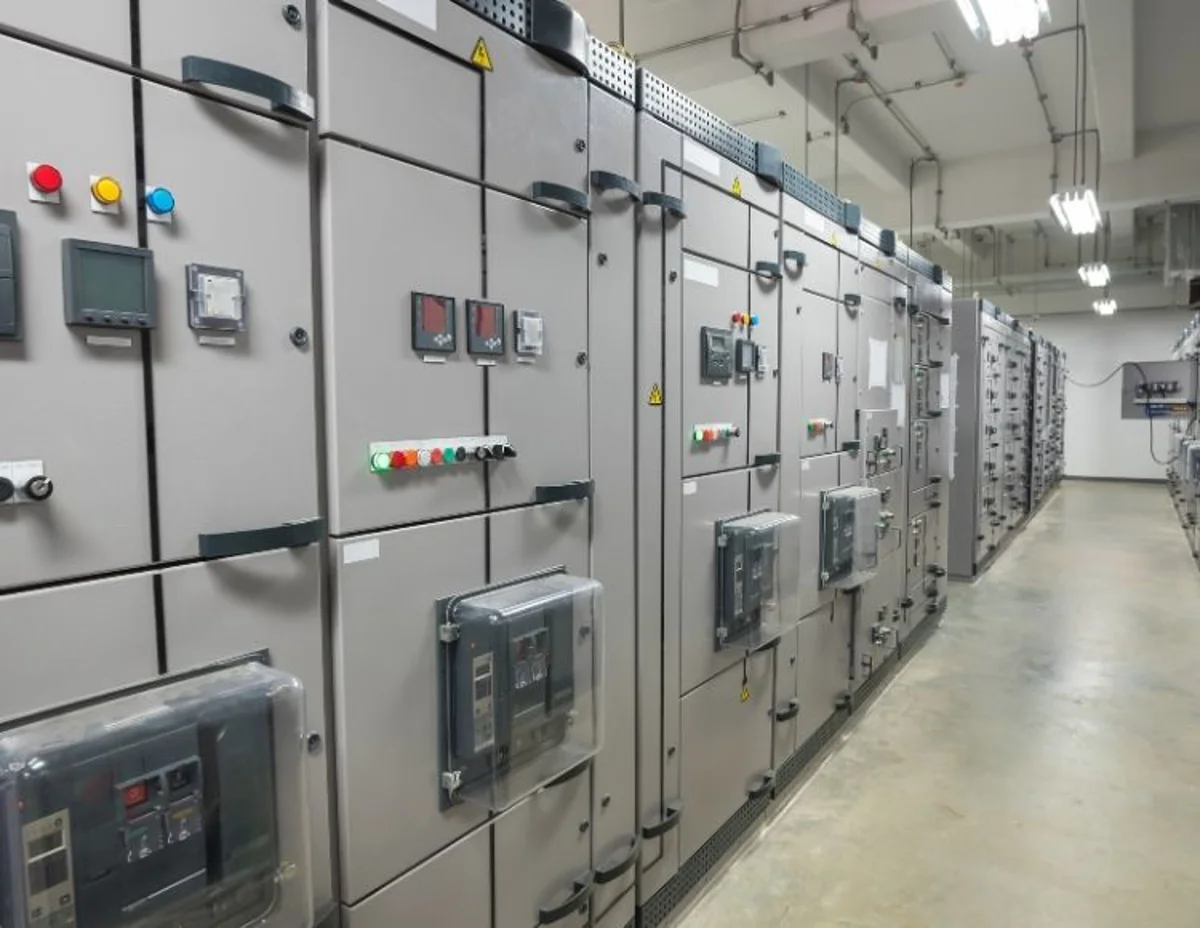
How to specify factory electrical infrastructure: transformer rating and loss class, MV switchgear type, panel short-circuit withstand, IE motor efficiency and UPS sizing. Includes a new-versus-used comparison and inspection checklists.
Three numbers govern every industrial electrical purchase: the plant demand load, the prospective short-circuit current and the expected annual running hours. Choose a transformer, switchgear or panel without them and you end up with either a capacity bottleneck or money spent on capacity you never use.
What Decides Transformer Selection
Distribution transformers in industry are most commonly rated between 100 kVA and 2,500 kVA. The rating is normally chosen about 20-25 percent above the diversified demand load, which leaves headroom for growth and keeps the unit in its efficient operating band. Oil-immersed transformers cost less per kVA and suit outdoor substations; cast-resin dry-type units carry a much lower fire load and are preferred inside buildings, shopping centres and data centres.
Loss Classes
The no-load (iron) and load (copper) losses on the nameplate are the single biggest item in a 20-year operating cost. No-load losses occur for every hour the transformer is energised; on a unit energised 8,760 hours a year, even a 300 W difference is about 2,600 kWh annually. When buying used, the nameplate must be legible and a recent oil analysis report is essential.
Choosing MV Switchgear and LV Panels
Common MV classes are 12 kV, 24 kV and 36 kV. Metal-enclosed panels with SF6 or vacuum circuit breakers are compact and low-maintenance. Rated current (630 A, 1,250 A), short-time withstand current (16 kA, 20 kA, 25 kA for 1 s) and internal arc classification must all be checked against the project short-circuit study. On LV panels the critical items are form of separation (Form 2b, 3b, 4b), IP rating and busbar current capacity.
Equipment Classes Compared
| Equipment | Common range | Selection driver | Expected life | Service interval |
|---|---|---|---|---|
| Oil distribution transformer | 100-2,500 kVA | Loss class, oil analysis | 25-35 years | Annual oil test |
| Cast-resin dry transformer | 100-3,150 kVA | Fire load, IP rating | 20-30 years | Annual cleaning |
| MV switchgear (vacuum CB) | 12-36 kV / 630-1,250 A | Short-circuit withstand | 25-30 years | Every 3-5 years |
| LV distribution panel | 250-6,300 A busbar | Form separation, IP | 20-25 years | Annual thermal scan |
| Induction motor (IE3) | 0.75-355 kW | Efficiency class, IP55 | 15-20 years | Bearings 20,000 h |
| UPS (online double conversion) | 10-500 kVA | Autonomy time | 10-15 years | Batteries 4-6 years |
Why Motor Efficiency Class Matters
Over its lifetime an electric motor usually consumes energy worth more than 20 times its purchase price. Choosing IE3 or IE4 instead of IE2 therefore pays back in two to three years in applications running more than 4,000 hours a year. On pumps and fans with variable load, adding a variable frequency drive alone can save 20-40 percent. ABB, Siemens, Schneider Electric, Eaton and WEG all offer full ranges across these equipment groups.
Used Electrical Equipment Checklist
- The nameplate must be legible: rating, voltage, current, vector group, impedance voltage.
- For transformers, request the latest oil analysis (moisture, acidity, dissolved gas) and insulation resistance measurement.
- Inspect switchgear and panels for arc traces, corrosion, moisture damage and defeated interlocks.
- Circuit breaker operation counters and last service date should be documented.
- On motors check shaft play, bearing noise, winding insulation resistance (megger) and frame earthing.
- For UPS units, look at battery manufacturing date and the last capacity test report; if batteries are over four years old, add replacement cost.
- Ask about the load profile of the plant the equipment came from; equipment from installations with heavy harmonics is more fatigued.
Cost Items and Investment Planning
Equipment price alone is a poor indicator in electrical projects. Transport, installation and cabling, protection coordination, testing, commissioning and utility approval all add up. On a substation refurbishment, cabling and protection coordination often add 30-50 percent on top of the equipment cost. For gensets, synchronisation panels and automatic transfer switches, see power and compressed air systems.
Harmonics and Power Quality
In plants with growing drive, UPS and LED lighting load, harmonic distortion quietly shortens equipment life. Above roughly 8 percent total harmonic current distortion, the neutral overheats, transformers carry extra losses and capacitors fail early. A power factor correction panel should never be renewed in a drive-heavy plant without measurement first.
Practical countermeasures are line reactors on drives, detuned capacitor banks, an active harmonic filter where needed, and a neutral conductor sized at least equal to the phases. Ask about the harmonic profile of the plant used equipment came from.
New or Used?
In electrical equipment, the decision follows how critical the item is and how much service life you expect. New is the norm for main transformers and breakers feeding the whole plant; for standby transformers, motors and panels, used equipment can be very economical.
| Criterion | New machine | Used machine |
|---|---|---|
| Initial investment | High | Substantially lower |
| Lead time | 8-30 weeks after order | Usually 1-3 weeks |
| Warranty and service | Manufacturer warranty, commissioning included | Limited or dealer warranty |
| Technology and efficiency | IE4 motors, digital protection relays, low-loss transformers | One or two generations behind |
| Spare parts | Secured for many years | Depends on model age |
| Depreciation | Steep loss in the first years | Much slower value loss |
| Finance and leasing | Suits leasing and incentives | Limited, needs appraisal |
The clearest advantage of new equipment is its loss figures: a current-efficiency transformer or an IE4 motor repays the price difference many times over across twenty years of operation. Digital protection relays log events, can be monitored remotely and simplify fault analysis. Internal arc classification to current standards also raises personnel safety directly.
What to ask when buying new matters just as much as the used checklist:
- Lead time: the schedule from order confirmation to commissioning must be in writing.
- Warranty scope: duration, excluded parts and response time should be stated clearly.
- Service network: ask the distance to the nearest authorised service and its response time.
- Parts commitment: stock status and lead time for critical parts belong in the contract.
- Training and commissioning: confirm operator training and acceptance tests are included in the price.
Frequently Asked Questions
What transformer rating does my plant need?
Sum the connected load, apply a diversity factor and divide by the power factor to get demand in kVA. Then pick the standard rating about 20-25 percent above that figure. For an 800 kW demand at 0.95 power factor, the calculation gives roughly 842 kVA, so a 1,000 kVA transformer is the right size.
Is a used transformer safe?
A transformer with clean oil analysis, high insulation resistance and balanced winding resistance can be used safely even at 20 years old. The risky units are those with no test report, moisture ingress or a history of through-fault damage. Requesting an independent test report before purchase is standard practice.
How big is the gap between IE3 and IE4 motors?
The efficiency difference is roughly 1-2 percentage points depending on rating. On a 75 kW motor running 6,000 hours a year that means about 5,000-9,000 kWh saved annually, so the price premium is recovered quickly in continuous duty.
What matters most when sizing a UPS?
Start from the real load and its inrush current, then calculate the autonomy you need. Online double conversion is the standard topology for sensitive loads. Battery life is highly temperature dependent: every 10 degrees above 25 Celsius roughly halves it.
When should a power factor correction panel be renewed?
Renew it when reactive penalties appear on the bill, when capacitor capacity drops below 80 percent of nameplate, or when harmonic distortion rises. In plants with significant harmonics, detuned filter panels should be specified.
Is used equipment acceptable for standby duty?
Yes. For a standby transformer, generator or panel that runs a few hours a year, used equipment is usually the sensible choice. For main equipment under continuous load, the loss figures and warranty cover of a new unit dominate.
To compare new and used transformers, MV switchgear, panels, motors and UPS systems, browse the electrical equipment category and ask the seller technical questions directly from the listing.