
Metalworking Machinery Buying Guide: New and Used Fiber Lasers, Press Brakes and CNC Lathes
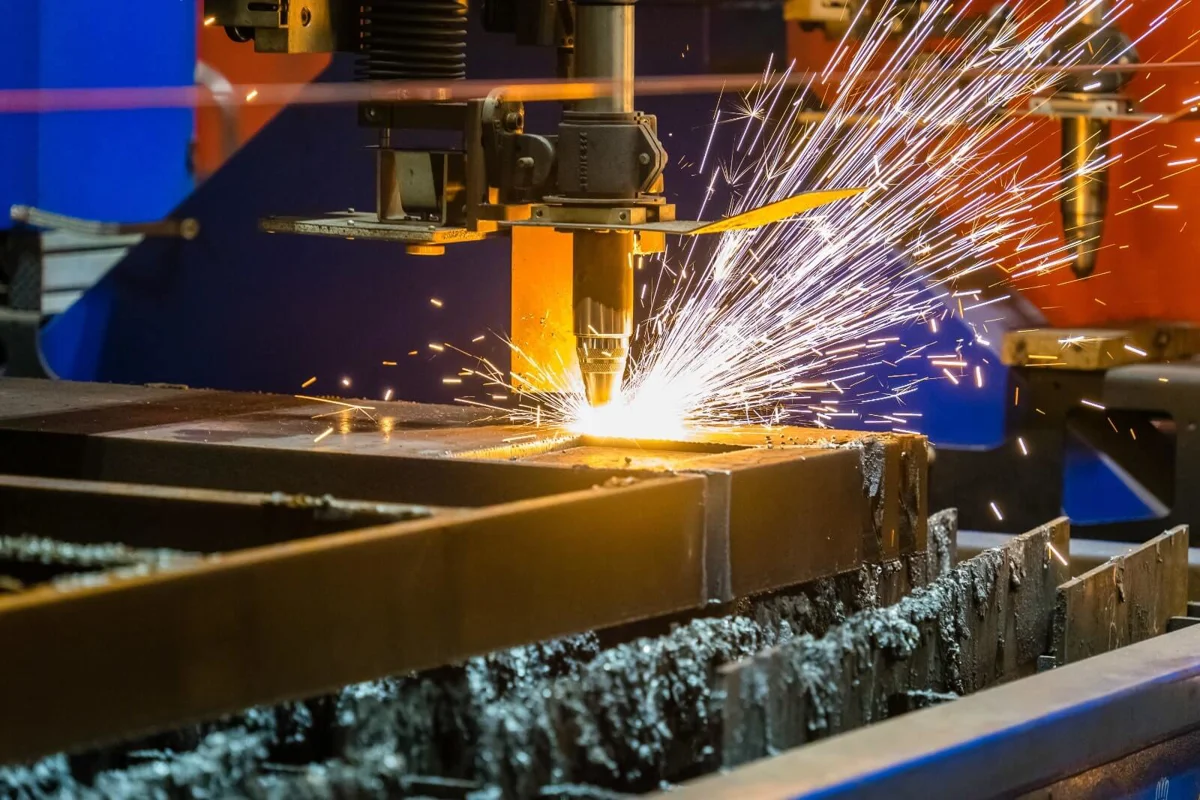
How to match fiber laser power to material thickness, calculate press brake tonnage and inspect CNC lathes and machining centres. Guideway condition, spindle life, energy use and a full new-versus-used comparison.
Three data points decide a metalworking machine purchase: total running hours, the condition of the components that carry accuracy (guideways, ball screws, spindle), and whether the control is still supported by the manufacturer. Verify those three and a used fiber laser or press brake will work close to new-machine performance for years.
Choosing Fiber Laser Power
Laser power follows directly from the thickness you cut and the speed you need. The generally accepted ranges are: about 10 mm mild steel at 1 kW, 16 mm at 3 kW, 20 mm at 6 kW and 25-30 mm at 12 kW. Stainless steel and aluminium cut thinner at the same power. Higher power is not only about thickness but also speed on thin sheet: a 6 kW machine cuts 2 mm sheet nearly twice as fast as a 3 kW one.
Resonator and Optics
Diode life in modern fiber sources is on the order of 100,000 hours, which in practice means the source outlives the machine. The parts that actually wear are the protective glass, cutting head lens and nozzles. When buying used, open the cutting head and look for burn marks or spatter on the lens. Assist gas matters too: cutting stainless with nitrogen can cost more in gas than in electricity.
Press Brake Tonnage
Press brake tonnage depends on sheet thickness, material strength, bend length and V-die opening. As a practical rule, 3 mm mild steel needs about 25-30 tonnes per metre and 6 mm needs about 65-80 tonnes per metre. Stainless requires roughly 1.5 times those figures, aluminium about half. Alongside tonnage, specify throat depth, stroke and the number of CNC axes. Six-axis backgauges cut setup time significantly on complex parts.
Machine Classes Compared
| Machine | Typical capacity | Installed power | Critical wear | Expected life |
|---|---|---|---|---|
| Fiber laser 3 kW | 16 mm mild steel | 18-25 kW | Protective glass, nozzles | 50,000+ hours |
| Fiber laser 6 kW | 20-22 mm mild steel | 30-40 kW | Lens, cutting head | 50,000+ hours |
| Press brake 135 t / 3,100 mm | 4 mm x 3,000 mm bend | 11-15 kW | Hydraulic seals, tooling | 25-30 years |
| CNC lathe (Ø 400 mm) | Ø 400 x 1,000 mm | 15-30 kW | Spindle bearings, turret | 30,000-50,000 hours |
| Vertical machining centre | 1,000 x 500 x 500 mm | 15-25 kW | Guideways, ball screws | 30,000-50,000 hours |
Used Machine Inspection Checklist
- Read total hours, spindle hours and alarm history from the control.
- Cut or machine a test part and verify dimensions with calipers and a dial indicator. The part, not the spec sheet, tells the truth.
- Measure backlash on guideways and ball screws; more than 0.02 mm on reversal indicates a rebuild is due.
- Listen to the spindle at several speeds and watch temperature rise; excessive heating signals imminent failure.
- On lasers, check cutting head, protective glass, nozzles and chiller performance; an undersized chiller degrades cut quality.
- On press brakes, check hydraulic oil temperature, seal leaks, completeness of the tooling set and backgauge repeatability.
- Confirm the control brand, software version and continuing manufacturer support.
- Get written confirmation that tooling, chucks, collets and fixtures come with the machine.
Durma (Durmazlar), Ermaksan, Baykal, Trumpf, Amada, Bystronic, Mazak, DMG Mori and Haas are the most commonly encountered manufacturers in this segment, and their parts and service coverage keeps used values high.
Running Cost Items
- Electricity: a 6 kW fiber laser draws 35-45 kW including chiller and extraction while cutting.
- Assist gas: oxygen cutting of mild steel is cheap; nitrogen cutting of stainless is expensive. A nitrogen generator can pay back at high consumption.
- Consumables: protective glass weekly to monthly, nozzles every 40-100 hours, turning inserts per part.
- Tooling investment: press brake die sets are a major complement to the machine and expensive to buy later.
- Compressed air: clean dry air is essential for pneumatics; suitable compressors and dryers are listed under power and compressed air systems.
New or Used?
In metalworking, shift count and job variety decide. A new machine brings a current control, higher cutting speed and warranty; a used one lets a single-shift job shop build a wider machine park for the same budget.
| Criterion | New machine | Used machine |
|---|---|---|
| Initial investment | High | Substantially lower |
| Lead time | 8-30 weeks after order | Usually 1-3 weeks |
| Warranty and service | Manufacturer warranty, commissioning included | Limited or dealer warranty |
| Technology and efficiency | High-power fiber source, automatic loading, remote diagnostics | One or two generations behind |
| Spare parts | Secured for many years | Depends on model age |
| Depreciation | Steep loss in the first years | Much slower value loss |
| Finance and leasing | Suits leasing and incentives | Limited, needs appraisal |
On a new fiber laser, added power buys speed as well as thickness, and a machine that finishes the same job in half the time cuts shift cost directly. Automatic sheet loading and unloading lets it run a lights-out shift. The manufacturer can connect remotely for diagnostics and software updates, which shortens downtime noticeably.
What to ask when buying new matters just as much as the used checklist:
- Lead time: the schedule from order confirmation to commissioning must be in writing.
- Warranty scope: duration, excluded parts and response time should be stated clearly.
- Service network: ask the distance to the nearest authorised service and its response time.
- Parts commitment: stock status and lead time for critical parts belong in the contract.
- Training and commissioning: confirm operator training and acceptance tests are included in the price.
Frequently Asked Questions
What laser power should I buy?
Let the thickness that makes up 80 percent of your work decide. If you mostly cut 1-6 mm sheet, 3 kW is sufficient and economical. If 10 mm and above is a regular part of your workload, choose 6 kW or higher, which also adds speed on thin sheet.
How do I measure accuracy on a used CNC machine?
Machine a standard test part and check it with a micrometer. Add a dial indicator backlash measurement on the guideways, a spindle runout test and a circularity test. Those three measurements reveal the real condition of the machine.
How much press brake tonnage do I need?
Use 25-30 tonnes per metre for 3 mm mild steel. A 3 metre bend in 3 mm therefore needs roughly 80-90 tonnes; allowing margin and occasional stainless work, buyers commonly choose the 100-135 tonne class.
What infrastructure does a laser need?
A vibration-free concrete floor, sufficient electrical supply, space and cooling for the chiller, fume and dust extraction, and assist gas (oxygen, nitrogen) supply. These items are a real investment alongside the machine price.
Should I buy a machine with an obsolete control?
A mechanically sound machine can be retrofitted with a new control, but the work is costly and slow. Budget the retrofit from the start if the mechanics are good; if the mechanics are worn, a retrofit makes no economic sense.
New fiber laser or a well-kept used one?
In a three-shift shop, a new high-power machine pulls ahead quickly on cutting speed and automation. With a single shift and variable workload, a well-kept used machine leaves budget for a press brake or welding station.
To compare new and used fiber lasers, press brakes, CNC lathes, machining centres and presses, browse the metalworking machinery category.