
Packaging Machinery Buying Guide: Filling, Flow-Wrapping and Shrink Lines
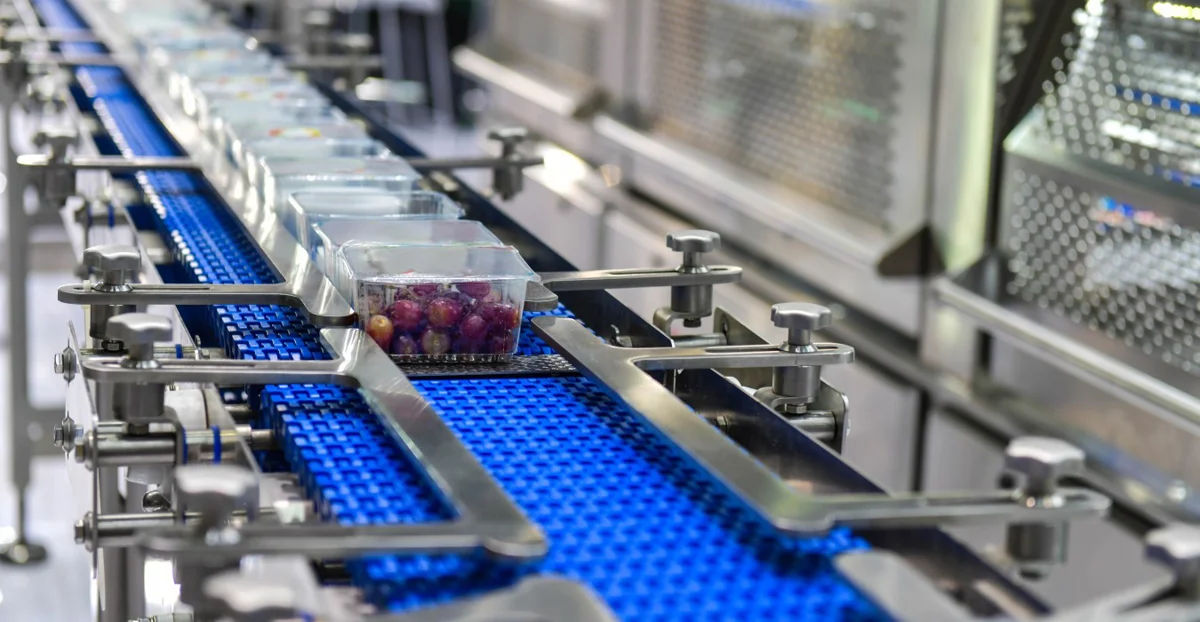
How to size a packaging line: filling accuracy, flow-wrapper speed, shrink tunnel energy use, changeover time and realistic OEE. Includes a new-versus-used comparison, inspection checklists and the real cost drivers of a line.
The right question in a packaging investment is not how many packs the machine can make, but how many packs the line actually delivers under real conditions. Changeover time, filling accuracy and film sensitivity typically put real output 20-35 percent below catalogue speed, and sizing must be based on that real figure.
The Building Blocks of a Packaging Line
A typical line consists of feeding, filling or dosing, closing, labelling, coding and case-packing or shrink stations. The weak link is always the slowest station, so what you really buy is line balance, not a single machine. Before adding a faster filler, confirm that the existing labeller can absorb the new throughput.
Filling and Dosing
Liquids are handled by volumetric, gravimetric or level filling. Gravimetric systems deliver 0.2-0.5 percent filling accuracy and pay for themselves quickly on high-value products through giveaway reduction. For powders and granules, multihead weighers come in 10, 14 or 24 head configurations; more heads mean both higher speed and better accuracy.
Flow-Wrappers, VFFS and Shrink
Horizontal flow-wrappers produce 60-200 packs per minute depending on product length. Vertical form-fill-seal machines run at 30-120 packs per minute on powders and granules. Shrink tunnels typically carry 12-24 kW of heating elements and are often the highest electricity consumer on the whole line.
Capacity and Energy Classes
| Machine | Typical capacity | Installed power | Changeover time | Critical consumables |
|---|---|---|---|---|
| Linear liquid filler (8 nozzles) | 2,000-6,000 bottles/h | 3-6 kW | 20-45 min | Seals, nozzles |
| Rotary fill-cap monobloc | 6,000-24,000 bottles/h | 10-25 kW | 45-90 min | Star plates, capping heads |
| Multihead weigher + VFFS | 40-120 packs/min | 6-12 kW | 15-30 min | Jaws, heater elements |
| Horizontal flow-wrapper | 60-200 packs/min | 5-10 kW | 10-25 min | Cutting knife, PTFE belts |
| L-sealer + shrink tunnel | 10-30 packs/min | 12-24 kW | 10-20 min | Heating elements, film |
Used Packaging Machine Checklist
- Ask for the total run counter and the last maintenance records; on food lines, cleaning protocol records matter too.
- Check servo motor and drive brands and models; discontinued drives create a real supply risk.
- Verify that product contact surfaces are 304 or 316L stainless; food and pharma lines are expected to be 316L.
- Inspect sealing jaws and heating elements for wear, film residue and temperature deviation.
- Confirm in writing that PLC and HMI software backups and passwords are transferred with the machine.
- Run a trial with your own film; machines are far more sensitive to film thickness and slip than buyers expect.
- Check that format parts (moulds, jaws, star plates) come with the machine; making them afterwards is expensive.
Spare parts and format sets are readily available for machines from Krones, Sidel, Multivac, Ilapak and Syntegon; with niche builders this item can mean long lead times.
The Cost Items That Actually Matter
The largest hidden cost on a packaging line is downtime and giveaway. A line running at 65 percent OEE needs roughly a third more shift time for the same output than one running at 85 percent. Add film and carton consumption, steam or electric heating on hot-fill lines, CIP and wash water, format tooling investment, and maintenance and spare parts. On hot-melt case packers, adhesive consumption alone reaches a significant annual figure.
Compressed air demand is frequently overlooked: a mid-size packaging line calls for 8-25 m³/h of free air. Suitable compressor options can be reviewed under power and compressed air systems.
Automation Level and Labour Balance
Packaging automation is judged at three levels. On semi-automatic lines, feeding and case packing are manual; investment is low but two to four operators per shift are needed. On automatic lines, feeding, filling, closing and labelling are all machine functions and the operator only supervises and changes formats. Fully integrated lines add robotic case packing and palletising, which minimises labour but means a single fault stops everything.
To pick the right level, compare annual output with labour cost. For single-shift operations below two million packs a year, a semi-automatic line is usually sufficient. Above ten million packs a year across three shifts, robotic palletising saves not only labour but also the cost of mis-stacked pallets and manual handling injuries.
The second criterion is product variety. In businesses running many pack sizes, full automation multiplies format tooling cost. In that case a hybrid layout, with flexible semi-automatic stations alongside an automatic main line, is usually more economical. Before committing, build a separate line balance for each of your three highest-volume products.
New or Used?
In packaging, the decision follows product variety and the number of shifts the line will run. A new line arrives with validation documentation and fast changeover; a used line gives single-format producers far more throughput for the same money.
| Criterion | New machine | Used machine |
|---|---|---|
| Initial investment | High | Substantially lower |
| Lead time | 8-30 weeks after order | Usually 1-3 weeks |
| Warranty and service | Manufacturer warranty, commissioning included | Limited or dealer warranty |
| Technology and efficiency | Servo axes, recipe-driven changeover, OEE monitoring | One or two generations behind |
| Spare parts | Secured for many years | Depends on model age |
| Depreciation | Steep loss in the first years | Much slower value loss |
| Finance and leasing | Suits leasing and incentives | Limited, needs appraisal |
A new packaging line cuts changeover to minutes thanks to servo axes and recipe memory. It can push production data into ERP and MES systems and track OEE automatically. In food and pharmaceutical work it also comes with a validation file, material certificates and traceability records, which auditors ask for directly.
What to ask when buying new matters just as much as the used checklist:
- Lead time: the schedule from order confirmation to commissioning must be in writing.
- Warranty scope: duration, excluded parts and response time should be stated clearly.
- Service network: ask the distance to the nearest authorised service and its response time.
- Parts commitment: stock status and lead time for critical parts belong in the contract.
- Training and commissioning: confirm operator training and acceptance tests are included in the price.
Frequently Asked Questions
How do I calculate the capacity my packaging line needs?
Divide the daily target quantity by shift hours and a realistic OEE. A plant targeting 60,000 packs a day over two shifts (16 hours) at 75 percent OEE needs roughly 83 packs per minute of nominal machine capacity.
When is a used filling machine risky?
Abrasive, high-viscosity or alcohol-based products wear seals and pump materials. Always ask which product the machine previously handled, and replace every contact elastomer with material rated for your own product before start-up.
Why does changeover time matter so much?
On a line doing three changeovers a day, 45 minutes each costs roughly 500 production hours a year. Tool-free adjustment and servo axes with position memory can halve that, and the saving should be converted directly into capacity when comparing offers.
Shrink or stretch wrapping?
Shrink gives a tighter, moisture-protected pack but consumes heat energy. Stretch wrapping is far cheaper to run and suits palletised loads. Retail-ready multipacks favour shrink; warehouse and shipping consolidation favours stretch.
Can coding and traceability be added later?
Inkjet or laser coders can be retrofitted on most lines. The critical point is whether the line can supply the trigger sensor and encoder signal. On machines with closed PLC software this integration can be harder and costlier than expected.
Which starts up faster, a new line or a used one?
A used line arrives quickly, but commissioning, completing format parts and dialling in settings can take weeks. A new line has a long lead time, yet installation and acceptance testing are run to plan by the manufacturer, so total time is often similar.
To compare new and used filling, flow-wrapping, shrink, labelling and case-packing machines, browse the packaging machinery category and request a line-specific quote from the seller.