
Printing Press Selection Guide: Offset, Digital and Flexo Compared
How to read the impression counter on an offset press, judge cylinder and roller condition, choose between B2 and B1 formats, find the digital break-even point and weigh new against used, with cost per sheet explained.
Choosing a printing press starts with monthly sheet volume, format and job type. On a new press, automation level and makeready waste decide the case; on a used one, the impression counter, cylinder surfaces and roller set separate two machines at the same price.
Choosing Format and Capacity
Commercial printing is dominated by two sheet formats: B2 (about 52x74 cm) and B1 (about 70x100 cm). B2 presses need less floor space and set up faster, which suits short runs. B1 presses fit more pages per sheet and therefore cut unit cost on long runs. Modern offset presses run at 15,000-18,000 sheets per hour; large-format packaging presses operate at 7,000-11,000 sheets per hour.
Units and Coating
Four colours (CMYK) is standard, while five and six unit presses allow Pantone spot colours and a coating tower. Adding a unit later is not realistic in practice, so the requirement must be defined at purchase. A coating unit removes a separate varnishing step on packaging and cover work and shortens lead times.
Printing Technologies Compared
| Technology | Economic run length | Speed | Makeready | Typical application |
|---|---|---|---|---|
| Offset B2 (4 colour) | 500-20,000 sheets | 13,000-16,000 sheets/h | 20-40 min | Brochures, books, catalogues |
| Offset B1 (4-6 colour) | 2,000-200,000 sheets | 15,000-18,000 sheets/h | 30-60 min | Magazines, packaging |
| Digital toner | 1-1,500 sheets | 70-130 pages/min | 2-5 min | Personalisation, short run |
| Flexo (label) | Above 3,000 metres | 100-250 m/min | 30-60 min | Labels, flexible packaging |
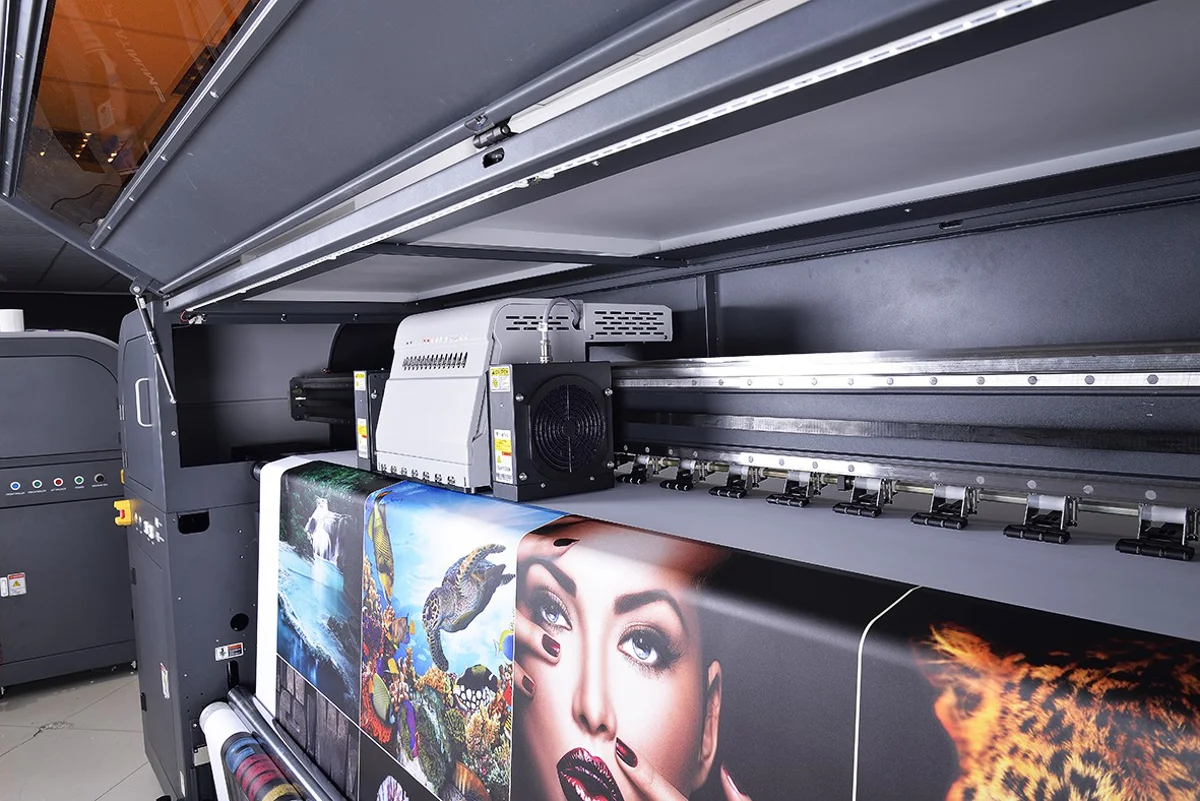
| Wide-format inkjet | From 1 piece | 20-150 m²/h | 5-10 min | Posters, signage |
Used Offset Press Checklist
- Read the total impression count from the console; 80-150 million impressions is the practical economic ceiling on commercial presses.
- Inspect plate, blanket and impression cylinders for scoring, corrosion and bearing play; cylinder regrinding is expensive.
- Ask about roller set age and hardness; hardened rollers destabilise colour balance.
- Run a test sheet and check four-colour registration under a loupe.
- Check the dampening system for scale build-up and confirm alcohol dosing works.
- Test feeder and delivery: double-sheet detectors, vacuum pump and suction performance.
- Verify console software version and whether the manufacturer still supports it.
- Budget dismantling, transport, installation and alignment from the outset; this item is routinely underestimated.
Presses from Heidelberg, Koenig & Bauer, Komori and Bobst have strong parts availability; on the digital side, HP Indigo and Xerox production systems are widespread.
Cost Per Sheet
- Plates and chemistry: each CTP plate is a fixed cost in offset that raises unit price on short runs.
- Ink and paper: paper is more than half of total job cost in most work, so waste reduction goes straight to margin.
- Makeready waste: 100-400 sheets per job change is typical; automatic plate changing cuts that significantly.
- Energy: a B1 offset press draws 60-120 kW installed, and dryers or coating towers add to that.
- Maintenance: plan annual lubrication, cylinder inspection and roller renewal.
For cutting, folding and packing the printed product, see packaging machinery, and for film and label substrate processing equipment see plastics and rubber machinery.
Digital or Offset?
The break-even point varies by job, but for standard four-colour work it sits somewhere between 500 and 1,500 sheets. Below that, digital wins because there are no plates and almost no makeready. Above it, offset cost per sheet falls quickly. For personalised and variable-data work, digital is the only option. Most printers today run both technologies and route work by job type.
Bindery and Finishing Equipment
A press alone does not make a print shop. The finishing line consists of guillotines, folders, collators, saddle stitchers, perfect binders, laminating and coating machines, and most of the lead time is spent there. Raising press capacity without raising finishing capacity is the most common bottleneck in printing.
For guillotines, cutting width (92 cm, 115 cm, 137 cm) and a programmable backgauge are the key items. On folders, the number of plates and the paper weight range matter; on perfect binders, PUR adhesive capability and books per hour. On laminating, hot or cold systems are chosen according to film type.
When buying used finishing equipment, check knives, dies and tooling sets. Guillotine blades with no regrind allowance left, worn folder rollers and glue pot residue on binders are frequent problems. Mechanically sound finishing machines last a very long time and often represent excellent value on the used market.
Prepress deserves attention too. Without colour management, a calibrated proofing device and a standard viewing booth, even the best press cannot deliver repeatable colour. These items cost little next to a press but have an outsized effect on waste.
New or Used?
For presses, monthly sheet volume and job mix decide. A new press cuts makeready waste with automatic plate changing and closed-loop colour control; a used press gives mid-volume printers a larger format or an extra unit for the same budget.
| Criterion | New machine | Used machine |
|---|---|---|
| Initial investment | High | Substantially lower |
| Lead time | 8-30 weeks after order | Usually 1-3 weeks |
| Warranty and service | Manufacturer warranty, commissioning included | Limited or dealer warranty |
| Technology and efficiency | Automatic plate changing, closed-loop colour control | One or two generations behind |
| Spare parts | Secured for many years | Depends on model age |
| Depreciation | Steep loss in the first years | Much slower value loss |
| Finance and leasing | Suits leasing and incentives | Limited, needs appraisal |
On a new offset press, automatic plate changing and closed-loop colour measurement can cut waste per job from several hundred sheets to a few dozen. In a market where runs keep getting shorter, that difference goes straight to margin. Current presses also draw less energy, suit alcohol-free dampening and talk directly to workflow software.
What to ask when buying new matters just as much as the used checklist:
- Lead time: the schedule from order confirmation to commissioning must be in writing.
- Warranty scope: duration, excluded parts and response time should be stated clearly.
- Service network: ask the distance to the nearest authorised service and its response time.
- Parts commitment: stock status and lead time for critical parts belong in the contract.
- Training and commissioning: confirm operator training and acceptance tests are included in the price.
Frequently Asked Questions
How many impressions are acceptable on a used press?
For commercial B2 and B1 presses, 30-80 million impressions offers the best balance. Above 150 million, cylinder and bearing refurbishment becomes likely, and that cost should be reflected in your offer.
What does moving and installing a press cost?
A B1 offset press weighs 15-30 tonnes, so dismantling, cranes, transport, positioning, levelling and commissioning form a significant budget line. If the work is not done by an authorised service, registration accuracy can be permanently degraded.
What kind of floor does a press need?
Offset presses are vibration sensitive and normally require a reinforced concrete floor with isolation pads. Floor load capacity must be calculated in advance against machine weight and dynamic loads.
Should I buy a CTP system as well?
A printer moving into offset needs a plate-making chain. Outsourcing plates lowers initial cost but lengthens lead times. Above roughly 20 plates a day, an in-house CTP system usually pays for itself.
What matters on a used flexo press?
Anilox roller cell volume and wear, impression setting mechanisms, dryer capacity and web tension control are the critical items. A press with a missing or worn anilox set costs far more than the ticket price suggests.
Does a new offset press suit short-run work?
In short runs, makeready time and waste decide. A new press with automatic plate changing proves itself in a shop making many job changes a day. If job count is low, pairing a well-kept used press with digital printing is more flexible.
To compare new and used offset, digital, flexo and bindery equipment, browse the printing machinery category.