
Tractor and Farm Machinery Buying Guide: New and Used Horsepower, Hectares and Maintenance
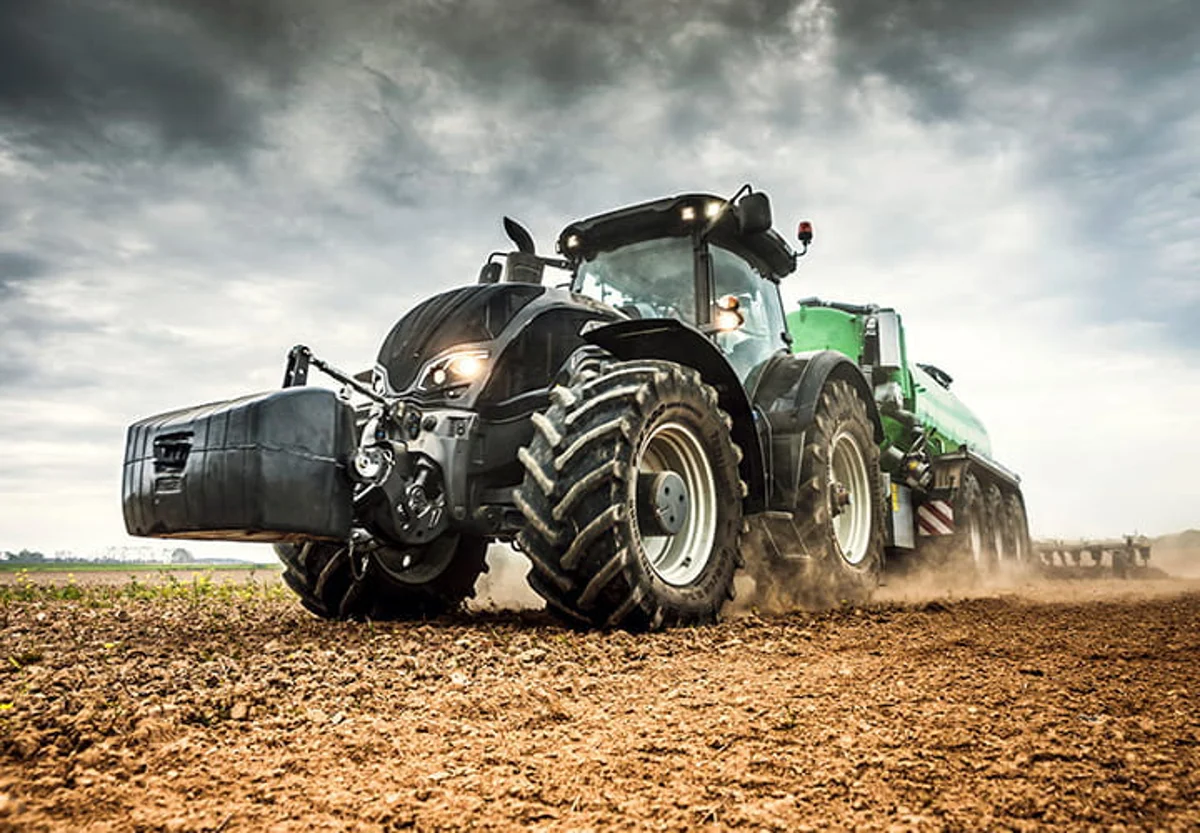
How much tractor horsepower does your land need? Drawbar power, PTO speed, three-point lift capacity, combine header width and baler output explained, with a new-versus-used comparison, checklists and cost per hectare.
Tractor selection starts by matching horsepower to the area you farm. A common rule allows roughly 1.5-2 hp per decare (about 15-20 hp per hectare), but soil type, slope and the draft requirement of your implements shift that figure substantially.
Choosing the Power Class
Three classes dominate. The 50-75 hp class suits orchards, vineyards, greenhouses and small parcels. The 75-120 hp class is the backbone of mid-scale arable farming and pulls most ploughs, disc harrows and seed drills. Above 120 hp is required for large areas, deep tillage and wide implements. Four-wheel drive markedly improves traction efficiency on slopes and heavy soils.
PTO, Hydraulics and Lift Capacity
PTO comes in 540 and 1,000 rpm standards, so confirm which one your implements need. Rear three-point lift capacity should be at least 1.5 times the weight of your heaviest implement. Hydraulic pump flow matters for front loaders and hydraulically driven equipment; 60-90 litres per minute is typical on mid-range tractors.
Machine Classes and Capacities
| Machine | Typical capacity | Power required | Daily output | Expected life |
|---|---|---|---|---|
| Tractor (mid class) | 75-120 hp | - | - | 10,000-15,000 hours |
| Mouldboard plough (4 furrow) | 1.4-1.6 m width | 90-110 hp | 3-5 hectares | 15-20 years |
| Grain drill (3 m) | 3 m working width | 75-90 hp | 8-15 hectares | 15-20 years |
| Combine harvester | 4.5-9 m header | 170-400 hp | 20-60 hectares | 4,000-6,000 hours |
| Round baler | 15-25 bales/hour | 80-110 hp | 10-20 hectares | 15 years |
Used Tractor Inspection Checklist
- Read the hour meter; 10,000 hours is within normal life on a maintained tractor, above 15,000 an engine overhaul is close.
- Start the engine cold; blue or white smoke on start-up points to rings or injectors.
- Test clutch engagement point, gear changes and the differential lock.
- Raise and lower the three-point linkage under load; drift down indicates hydraulic leakage.
- Run the PTO under load and listen for vibration or noise from the bearings.
- Check front axle, tie rods and ball joints for play; front differentials on 4WD tractors are expensive.
- Inspect tyre tread depth and sidewall cracking; tractor tyres are a major cost item.
- Verify registration documents and any agricultural credit lien on the machine.
John Deere, New Holland, Case IH, Claas, Fendt, Massey Ferguson, Türk Traktör and Hattat all have wide service coverage. On the implement side, Lemken and Kuhn are frequently encountered.
Cost Per Hectare
- Fuel: a tractor burns 12-20 litres per hour in heavy tillage and 5-9 litres in light work.
- Maintenance: engine oil every 250-500 hours, hydraulic oil every 1,000 hours, air filters seasonally.
- Wear parts: plough shares, harrow discs, drill coulters and baler twine should be budgeted per season.
- Tyres: rear tyres last 4,000-6,000 hours; early wear usually traces back to incorrect inflation pressure.
- Insurance and finance: machines bought on agricultural credit carry liens that affect transfer.
For post-harvest processing see food processing machinery, and for land levelling, pond and channel work see construction machinery.
Precision Farming and Implement Automation
The biggest change in tractor selection over the last decade is the spread of precision farming hardware. GPS-guided auto-steer removes overlapping passes and saves 5-12 percent on fuel, seed, fertiliser and crop protection. With wide implements the saving is larger still.
ISOBUS compatibility is the second key item. An ISOBUS tractor can control implements from different manufacturers through one terminal, removing the need for a separate screen and wiring loom per implement. When buying a used tractor, check whether the ISOBUS socket is fitted, because it governs compatibility with implements you buy later.
Variable rate application adjusts fertiliser and seed rates within a field according to soil analysis. On high-input crops the technology can pay for itself in a few seasons. It only works, however, with an up-to-date soil map and correct calibration; the hardware alone produces nothing.
Fleet coherence matters as well. An implement mismatched to tractor power raises fuel consumption and stresses the driveline. Before buying an implement, compare tractor drawbar power, hydraulic flow and weight against its requirements, and plan front weights and ballast where needed.
New or Used?
In agriculture, annual hours and whether you do contract work shape the decision. Above 1,000 hours a year, and for contractors, new tractors lead; for farmers working their own land, a well-kept used machine is the most efficient use of capital.
| Criterion | New machine | Used machine |
|---|---|---|
| Initial investment | High | Substantially lower |
| Lead time | 8-30 weeks after order | Usually 1-3 weeks |
| Warranty and service | Manufacturer warranty, commissioning included | Limited or dealer warranty |
| Technology and efficiency | Current emission class engine, ISOBUS, auto-steer | One or two generations behind |
| Spare parts | Secured for many years | Depends on model age |
| Depreciation | Steep loss in the first years | Much slower value loss |
| Finance and leasing | Suits leasing and incentives | Limited, needs appraisal |
A new tractor is directly compatible with precision farming hardware thanks to its current engine and ISOBUS infrastructure, and auto-steer can be factory fitted. The manufacturer warranty removes early-life failure risk and prevents mid-season stoppages. On time-critical work such as harvest, that is a direct revenue difference.
What to ask when buying new matters just as much as the used checklist:
- Lead time: the schedule from order confirmation to commissioning must be in writing.
- Warranty scope: duration, excluded parts and response time should be stated clearly.
- Service network: ask the distance to the nearest authorised service and its response time.
- Parts commitment: stock status and lead time for critical parts belong in the contract.
- Training and commissioning: confirm operator training and acceptance tests are included in the price.
Frequently Asked Questions
How much horsepower do I need?
As a rough guide, plan 15-20 hp per hectare of arable land, so 50 hectares suits roughly 75-100 hp. Heavy clay, deep tillage and sloping ground push that figure 20-30 percent higher.
How many hours is too many on a used tractor?
With documented service history, 6,000-10,000 hours is a good balance. Above 15,000 hours, engine, clutch and transmission overhauls become likely and that cost should be reflected in the price.
Is four-wheel drive essential?
On slopes, wet soil, with a front loader and in heavy draft work, 4WD is a clear advantage. On flat, light soils used mainly for transport and light implements, two-wheel drive can be more economical.
What should I check on a combine harvester?
Threshing drum and concave wear, sieve system, straw walker condition, header fingers and engine hours are the critical items. Also ask which crops it harvested; maize and sunflower are much harder on drums and sieves.
How do I check implement compatibility?
Compare the tractor three-point hitch category (Cat I, II, III), PTO speed, number of hydraulic outlets and lift capacity against the implement requirement. A category mismatch can be adapted, but insufficient lift capacity cannot.
New tractor or a well-kept used one?
Below 400 hours a year, a well-maintained 8-12 year old tractor is usually the most rational choice. For contractors, large farms and use above 1,000 hours a year, the fuel, warranty and comfort advantages of a new machine take over.
To browse new and used tractors, combines, ploughs, drills, balers and other implements, see the agricultural machinery category.