
Woodworking Machinery Buying Guide: New and Used CNC Routers, Edgebanders and Sanders
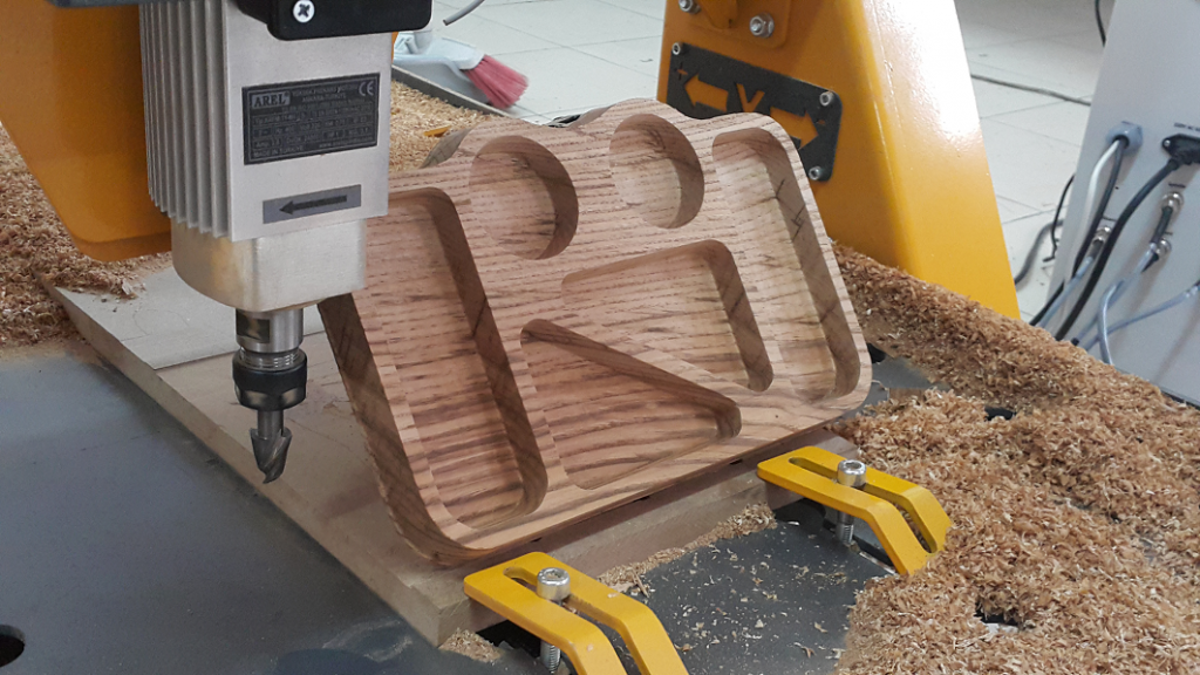
What to check before buying woodworking machinery: spindle hours on a CNC router, edgebander feed speed, wide-belt sander width and dust extraction capacity. Includes a new-versus-used comparison, inspection checklists and real cost drivers.
Three figures decide whether a woodworking machine is a good buy: total spindle or main-motor hours, whether the controller is still supported by the manufacturer, and the dust extraction capacity it is connected to. Read those three correctly and a used CNC router can run almost as productively as a brand-new one.
Woodworking Machine Types and What Each One Is For
A furniture or panel shop is usually built around five machine groups: beam saws, CNC routers and machining centres, edgebanders, wide-belt sanders and press lines. Small workshops start with a beam saw and an edgebander; once volumes rise, a CNC router with automatic loading cuts waste sharply and stabilises part accuracy.
CNC Routers and Machining Centres
For nesting work, a 1300 x 2500 mm or 1550 x 3050 mm table, a 9-12 kW liquid-cooled spindle and an 18,000-24,000 rpm range are the accepted standard. The number of vacuum zones matters more than most buyers expect: it is what keeps small parts from shifting, and it directly drives scrap rate. Five-axis machines pay off on stairs, doors and solid profiles, but rarely on flat panel production.
Edgebanders and Wide-Belt Sanders
Edgebander feed speeds run from 12 m/min to 25 m/min. Glue pot heat-up time and glue type (EVA or PUR) set both the visual quality of the joint and the consumable cost. Wide-belt sanders are most common in 1,100 mm and 1,350 mm working widths; belt speed, thickness tolerance and contact roller hardness define surface quality.
Capacity and Power Classes Compared
The table below summarises the machine classes most often specified by workshop size, using configurations common in the market.
| Machine type | Typical working area | Installed power | Dust extraction need | Expected life |
|---|---|---|---|---|
| CNC router (3-axis) | 1300 x 2500 mm | 12-18 kW | 3,500-5,000 m³/h | 25,000-35,000 spindle hours |
| CNC machining centre (5-axis) | 1550 x 3050 mm | 22-30 kW | 5,000-7,000 m³/h | 30,000+ spindle hours |
| Beam saw | 3200 x 3200 mm | 9-15 kW | 2,500-3,500 m³/h | 15-20 years |
| Single-sided edgebander | 12-25 m/min feed | 7-14 kW | 1,500-2,500 m³/h | 15-20 years |
| Wide-belt sander (2 heads) | 1,100-1,350 mm | 20-45 kW | 4,000-6,000 m³/h | 20+ years |
Used Woodworking Machine Inspection Checklist
Work through the list in this order and most problem machines are eliminated within the first half hour:
- Read total spindle hours and the alarm history from the controller; if no log is available, ask the seller for service records.
- Run the spindle unloaded at 24,000 rpm and listen for vibration or noise changes; bearing replacement is a mid-size cost item.
- Check backlash on linear guides and ball screws: more than 0.1 mm deviation over a metre is unacceptable for precision work.
- Measure vacuum pump depression; anything below 60 mbar means the pump needs an overhaul.
- On edgebanders, inspect glue pot residue, pre-milling cutters and motor temperature under load.
- Look inside the electrical cabinet for non-original additions, spliced cables and bypassed safety circuits.
- Confirm the controller is still supported by the manufacturer; unsupported boards are the single riskiest item in a used machine.
Machines from SCM, Biesse, Homag, Weinig and Felder have wide spare-part and service coverage, which means even a 15-year-old unit can be economically refurbished.
Cost Items That Drive Total Ownership
Purchase price is usually a little over half of the five-year cost. The rest comes from:
- Electricity: a 15 kW CNC router running 8 hours a day, 250 days a year, consumes roughly 30,000 kWh annually.
- Tooling and consumables: diamond router bits last 40-80 working hours, sanding belts 8-20 hours, edgebander cutters 300-500 hours.
- Extraction and compressed air: weak extraction hurts both surface quality and workplace safety. Compressor and air network options are listed under power and compressed air systems.
- Scheduled maintenance: spindle greasing every 500 hours, guide lubrication weekly, vacuum pump oil change every 2,000 hours.
New or Used?
The decision in woodworking follows annual running hours and job variety. A new machine brings automation, energy efficiency and warranty; a used one buys more capacity, or a second workstation, for the same budget.
| Criterion | New machine | Used machine |
|---|---|---|
| Initial investment | High | Substantially lower |
| Lead time | 8-30 weeks after order | Usually 1-3 weeks |
| Warranty and service | Manufacturer warranty, commissioning included | Limited or dealer warranty |
| Technology and efficiency | Current CNC control, automatic loading, low energy | One or two generations behind |
| Spare parts | Secured for many years | Depends on model age |
| Depreciation | Steep loss in the first years | Much slower value loss |
| Finance and leasing | Suits leasing and incentives | Limited, needs appraisal |
A new CNC router or edgebander works cleanly with current CAD-CAM software thanks to an up-to-date controller, and consumes markedly less energy than an older generation. The manufacturer can connect remotely for diagnostics. It also arrives with guarding built to current machine safety standards, which is a direct advantage at inspections.
What to ask when buying new matters just as much as the used checklist:
- Lead time: the schedule from order confirmation to commissioning must be in writing.
- Warranty scope: duration, excluded parts and response time should be stated clearly.
- Service network: ask the distance to the nearest authorised service and its response time.
- Parts commitment: stock status and lead time for critical parts belong in the contract.
- Training and commissioning: confirm operator training and acceptance tests are included in the price.
Frequently Asked Questions
How many hours is too many for a used CNC router?
A well-maintained CNC router is considered safe up to about 15,000 spindle hours. Above 25,000 hours you should budget for spindle, guide and ball-screw refurbishment. If the hour counter cannot be read from the controller, the price should be discounted accordingly.
What electrical supply does a woodworking shop need?
A mid-size shop running a CNC router, edgebander, sander and extraction together draws 60-90 kW. The incoming supply must match that load, a power factor correction panel should be present, and each machine should sit on its own protected circuit.
What is the difference between EVA and PUR edgebanding glue?
EVA glue is cheaper and easier to clean, and it is sufficient for products with moderate moisture exposure such as kitchen cabinets. PUR glue is far more resistant to water and heat and gives an almost invisible glue line, but pot cleaning is harder and consumable cost is higher.
How is dust extraction capacity calculated?
Each machine states its port diameter and required air velocity. In practice a single CNC router needs 3,500-5,000 m³/h, while a complete furniture workshop is planned around a 15,000-25,000 m³/h central system. If filter area is undersized, airflow drops steadily over time.
Does a used machine still need CE marking?
Machines placed on the market require CE marking and a manual in the local language. If a used machine has had guards removed or safety circuits bypassed, compliance responsibility passes to the operating company, so the safety chain must be tested before purchase.
When does a new machine make sense?
For a line running more than 3,000 hours a year, focused on one product and fed by automation, a new machine repays itself within a few years on energy, waste and downtime. For low volumes and varied work, a well-kept used machine stays more flexible.
To see current new and used CNC routers, edgebanders, beam saws and sanders, browse the woodworking machinery category and send your offer directly to the seller from the listing page.