
- I would like to check availability.
- I would like to know the delivery time.
- I would like to know the payment terms.
- I would like shipping information.
- Is leasing available?
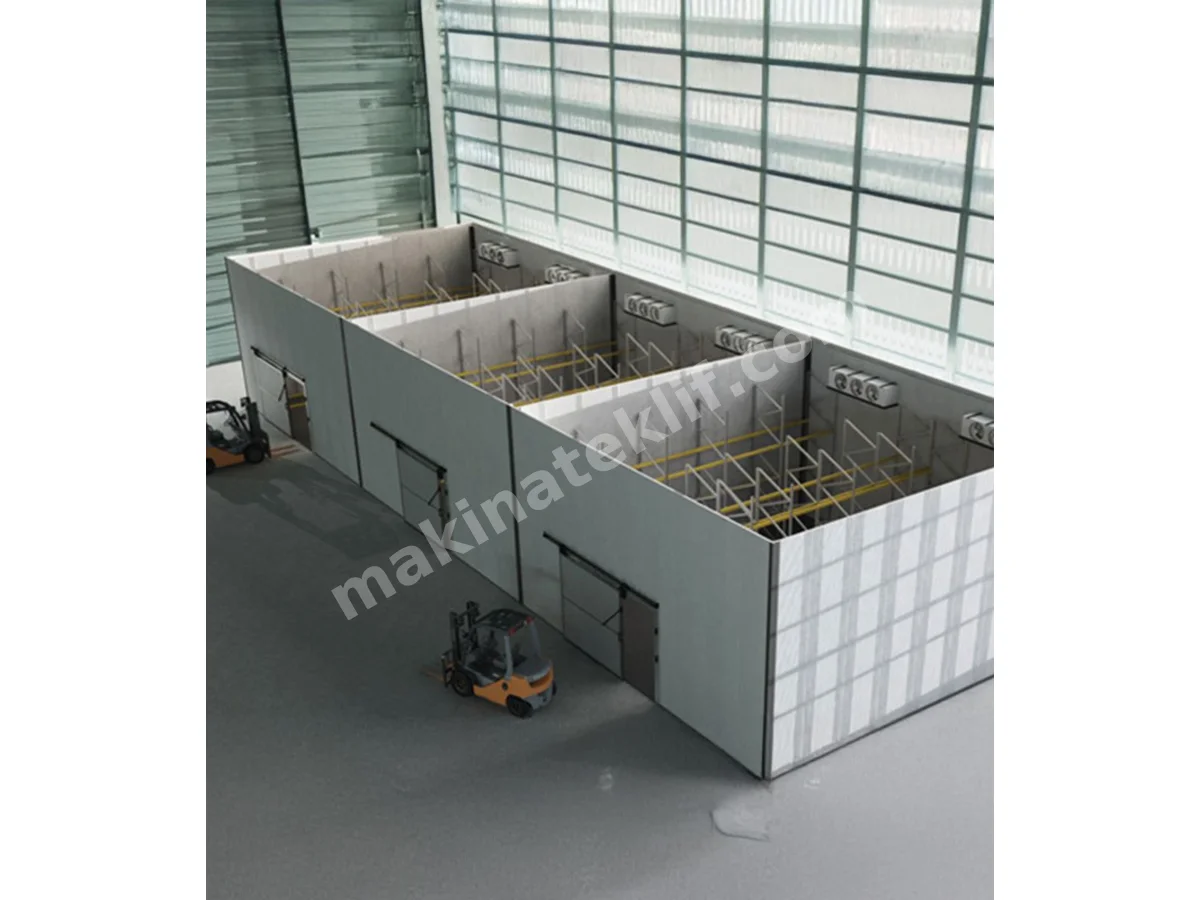
Cold storage rooms are insulated spaces equipped with climate control systems. Storing harvested products under suitable conditions helps slow down their metabolic activity and preserve their freshness. This allows food and other sensitive products to reach consumers while maintaining their quality.
A wide range of products can be stored in cold rooms, including fruits, vegetables, meat, dairy products, and fish. The quality of these products is directly affected by the temperature and humidity levels of their storage environment. Unsuitable temperatures can accelerate the growth of microorganisms, while moisture loss can lead to weight reduction, shriveling, and deterioration in product quality. For this reason, temperature and humidity levels must be set and controlled according to the requirements of each product. These conditions are maintained using industrial refrigeration equipment and humidification systems.
What Are the Rules for Cold Storage?
Several key rules should be considered when installing and operating cold storage facilities:
- Before installation, the type of products to be stored, stock volume, and frequency of incoming and outgoing goods should be assessed as part of the project planning process.
- Cold room doors should be operated in a way that minimizes cold air loss and the entry of warm outside air.
- Humidity must be controlled to help prevent product weight loss, discoloration, shriveling, and spoilage. Humidity levels should be adjusted according to the type of product.
- Cold room shelving systems should be arranged to maintain suitable storage conditions without obstructing air circulation around the products.
- Industrial refrigeration units with suitable capacities should be used to distribute cold air evenly throughout the storage area.
- Products should be arranged in a way that does not obstruct airflow.
What Are the Features of a Cold Storage Room?
Cold storage rooms are specially designed spaces where the internal temperature is continuously controlled and heat exchange with the outside environment is limited through insulation. The insulated panels used during installation help minimize the effect of external weather conditions on the temperature inside the storage room.
Different temperature ranges can be used depending on the type of product and the required storage period. The general storage classifications are as follows:
- Cool Storage: 8 °C to 15 °C
- Cold Storage: 2 °C to 8 °C
- Chilled Storage: -4 °C to 2 °C
- Frozen Storage: 0 °C to -25 °C
- Blast Freezing: -25 °C to -40 °C
These temperature ranges are provided as general classifications. The appropriate operating temperature should be determined according to the product type, its characteristics, and applicable storage standards.
Suitable temperature and humidity levels must be maintained for every product stored in a cold room. Some food products are hygroscopic, meaning they can exchange moisture with their surrounding environment. To prevent excessive moisture loss or quality problems caused by excessive humidity, storage conditions should be regulated using suitable humidification and control systems.
Storing fresh fruits and vegetables below their freezing points can damage their texture and quality. Therefore, they should be stored above their respective freezing points, at temperatures appropriate for their type and storage period. Since fruits and vegetables have a high water content, moisture loss must also be carefully controlled. Maintaining suitable humidity levels helps reduce shriveling and weight loss.
At UYSALSOĞUTMA, we design and implement cold storage projects tailored to our customers' requirements and the characteristics of the products to be stored. Contact us for detailed information about our cold storage solutions and to explore the options best suited to your project.
Uysal Soğutma
Karaman Organize Sanayi Bolgesi 8 Cad No:3, Merkez, Karaman, Turkiye