
Filling Machine Prices and Models
9 products found.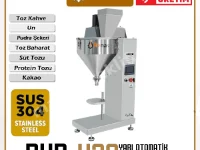 Image
Semi-Automatic Auger Powder Filling Machine - Ryd-v28
 Image
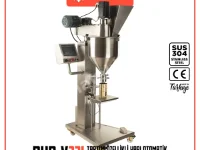
Semi-Automatic Powder Filling Machine 50 g–5 kg
 Image
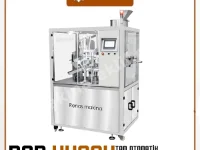
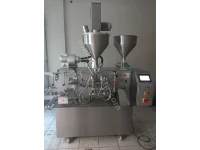
ROD-K400U – Ultrasonic Industrial Cream Tube Filling and Sealing Machine
 Image
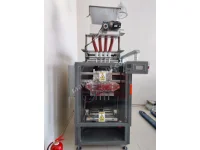
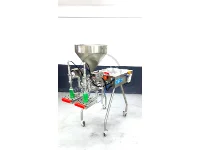
3-in-1 Instant Coffee Powder Filling Machine
 Image
Semi-Automatic Liquid Filling Machine
 Image
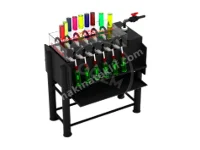
Manual 12-Head Level Filling Machine
 Image
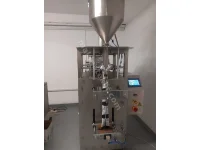
Servo-Controlled Powder Filling and Packaging Machine
 Image
Turkish Coffee Packaging and Packing
 Image
Paint Filling Machine
Filling Machines: Liquid, Cream, Powder and Granule Fillers
A filling machine fills liquid, viscous, powder or granular products into bottles, jars, canisters, pails or containers in a set amount. It is one of the core machines on the lines of water, juice, oil, dairy, sauce, detergent, cosmetics, pharmaceutical and chemical producers. On makinateklif.com you can compare new and used filling machine listings by product type, capacity, number of nozzles and location.
Types of Filling Machines and Which Products They Suit
Piston fillers: Fill creams, sauces, honey and viscous products accurately by volume.
Gravity and level fillers: Fill water, vinegar and free-flowing liquids to an even level.
Pump and flowmeter fillers: Switch quickly between volumes for oils, detergents and chemicals.
Isobaric (counter-pressure) fillers: Fill carbonated drinks without losing gas.
Auger powder fillers: Fill flour, spices, milk powder and coffee by weight or volume.
Pail, drum and IBC fillers: Fill industrial paint, oil and chemicals into large containers.
What Determines Filling Machine Prices?
Number of nozzles and capacity: Bottles or containers filled per minute.
Filling principle: Piston, gravity, pump, flowmeter or auger.
Product properties: Viscosity, particles, foaming and hot fill needs.
Hygiene level: Stainless steel, CIP cleaning and aseptic design.
Integration: Sold as a monobloc with capping, labelling and feeding units.
What to Check When Buying a Used Filling Machine
New and used machines from manufacturers such as Krones, KHS, Sidel and Serac are widely traded. When assessing a used machine, it is worth checking the following:
Condition of nozzles, valves and seals, with no dripping
Fill accuracy and low variation between containers
Product contact surfaces are stainless and cleanable
Format parts are complete and suit your bottle sizes
A trial fill with your own product
High-volume beverage and food producers usually choose new monobloc lines, while small and mid-size producers often buy semi-automatic or used fillers.