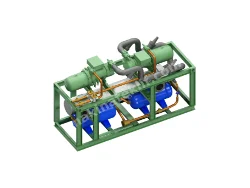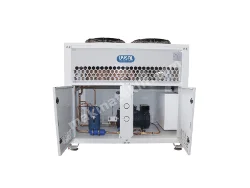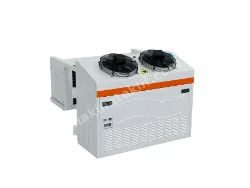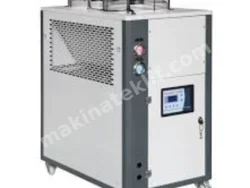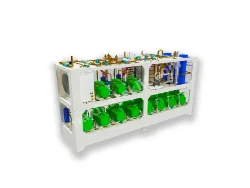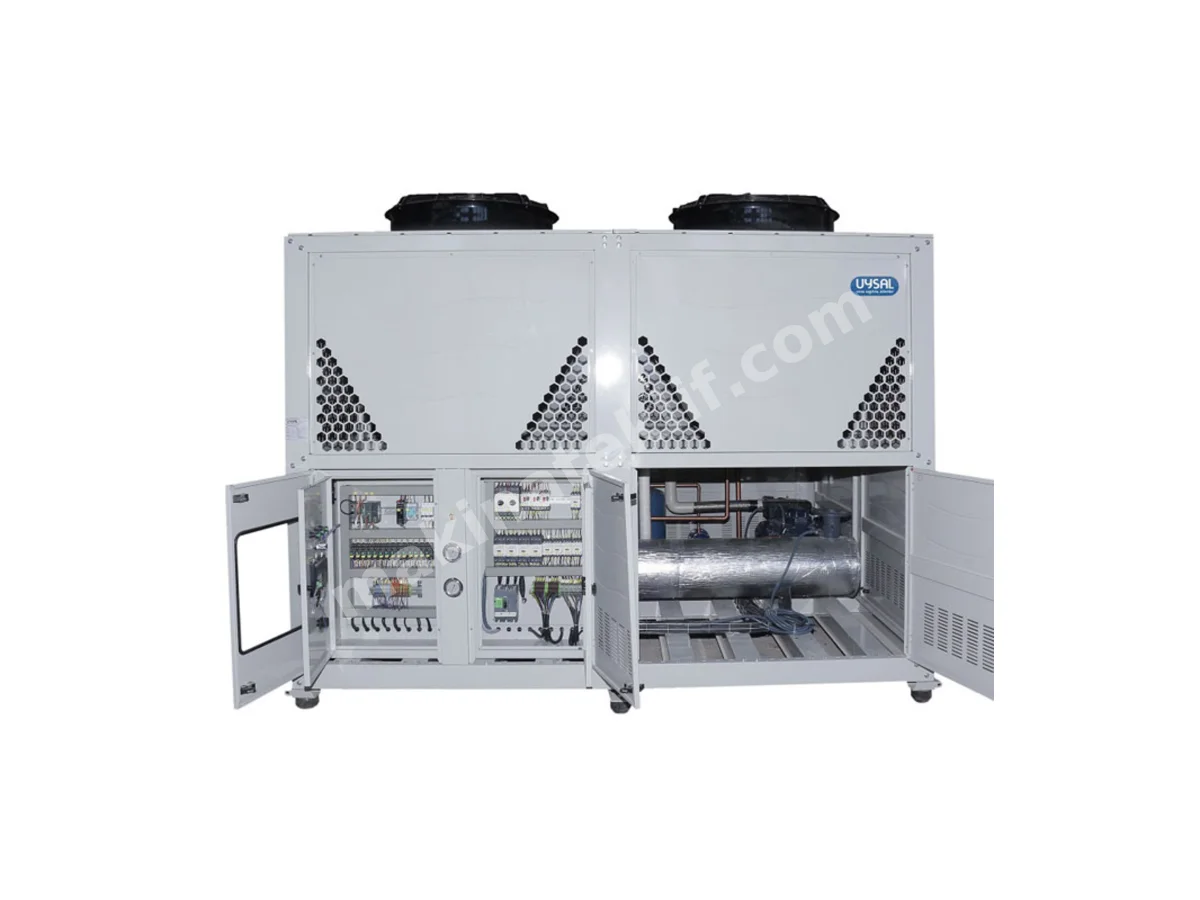
#0000898CategoryIndustrial Chiller & Cooling SystemsProduct TypeAir-Cooled ChillerBrandUysal SoğutmaListing TypeFor SaleConditionNewLocationKaramanMerkezDeliveryIn Stock
- I would like to check availability.
- I would like to know the delivery time.
- I would like to know the payment terms.
- I would like shipping information.
- Is a used option available?
- Is leasing available?
Air-Cooled Chiller: Functions, Advantages, and Applications
Air-cooled chiller systems are widely used to meet liquid cooling requirements in industrial and commercial facilities. Their functions, operating principles, advantages, and various applications are explained below.
What Is an Air-Cooled Chiller?
An air-cooled chiller is a cooling unit that uses ambient air to condense the refrigerant and lower the temperature of a liquid. It typically cools water or a water-antifreeze mixture for process cooling and air conditioning systems.
Operating Principle
Air-cooled chiller systems operate using a vapor-compression refrigeration cycle. The main stages are as follows:
- Refrigerant Evaporation: In the evaporator, the low-pressure, low-temperature refrigerant absorbs heat from the liquid being cooled and evaporates. This reduces the temperature of the water or antifreeze mixture.
- Vapor Compression: The refrigerant vapor is drawn into the compressor and compressed to a higher pressure. Its pressure and temperature increase during this process.
- Condensation: The hot, high-pressure refrigerant is directed to the air-cooled condenser. Fans circulate ambient air through the condenser coil. The refrigerant transfers its heat to the air, condenses, and changes into a liquid.
- Expansion: As the liquid refrigerant passes through the expansion valve, its pressure and temperature decrease. It then returns to the evaporator, where the refrigeration cycle begins again.
This cycle repeats continuously, helping maintain the cooled liquid at the required temperature.
Advantages of Air-Cooled Chiller Systems
- Reduced Water Requirements: Since heat is transferred to the ambient air, the system does not require a cooling tower or a condenser water circuit. This provides an advantage in areas where water resources are limited.
- Simpler Installation: The absence of additional systems such as cooling towers and condenser water piping can simplify the installation process.
- Easier Maintenance: Maintenance requirements associated with cooling towers, condenser water pumps, and related water circuits in water-cooled systems are eliminated. However, condenser coils, fans, filters, and the refrigeration circuit still require regular inspection.
- Flexible Installation Options: Models available in different capacities and designs offer installation options suitable for the requirements of buildings and industrial facilities, including indoor or outdoor installations.
- Portable Models: Compact, small-capacity models can be used for temporary cooling requirements and mobile applications.
Applications
- Air Conditioning Systems: Used to provide cooling for central air conditioning systems in offices, shopping centers, hotels, hospitals, and industrial facilities.
- Industrial Processes: Used to control the temperature of production equipment and process liquids in industries such as plastics, food processing, chemicals, and metalworking.
- Data Centers: Used as part of cooling systems in server rooms and data centers to help maintain equipment operating temperatures.
- Food Processing: Used in food production and processing facilities to control process temperatures, maintain production conditions, and support product quality.
Uysal Soğutma
Karaman Organize Sanayi Bolgesi 8 Cad No:3, Merkez, Karaman, Turkiye