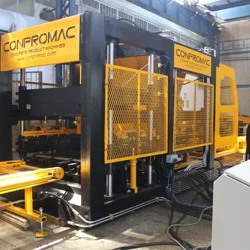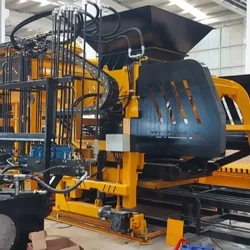
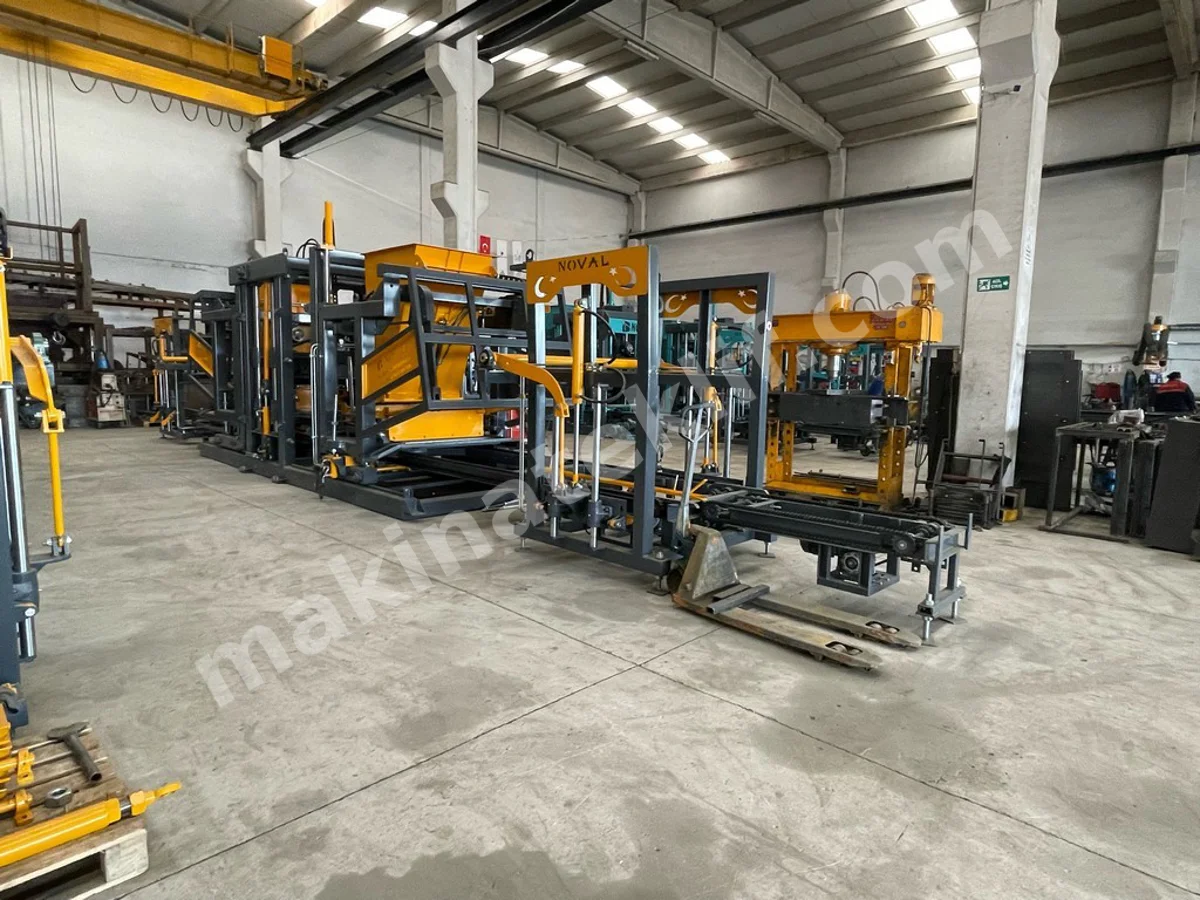
NBM 5030 Concrete Paving Stone and Block Making Machine
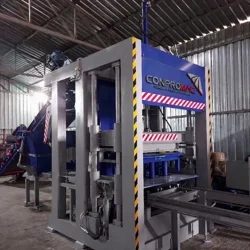
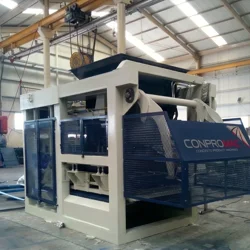
#0000675CategoryConcrete Paver & Brick Making MachinesBrandNovalModelNBM 5030Listing TypeFor SaleConditionNewOriginTurkiyeDeliveryIn StockMin. Order1The NBM 5030 Concrete Paving Stone and Block Machine, developed by NOVAL A.Ş., is designed for professional concrete product facilities with semi-automatic and fully automatic system options that can be adapted to different production targets. Its powerful hydraulic structure, high pressing capacity, and user-friendly control system enable the regular operation of concrete block and interlocking paving stone production.
The machine uses a hydraulic system operating at a pressure range of 120-200 bar to compact the concrete mixture inside the mold in a controlled manner. It can produce 12 standard blocks measuring 20 × 40 × 20 cm or 30 interlocking paving stones in a single pressing cycle. This production capacity provides a balanced solution for businesses seeking to meet medium- and high-volume orders.
During production, the concrete compacted inside the mold is pressed onto production pallets. The products are transported to the drying area on the same pallets and remain on the pallets until they achieve the required strength. Therefore, sufficient production pallets should be prepared during facility planning by taking daily production targets, drying time, and product variety into consideration.
Flexible and Controlled Production Structure
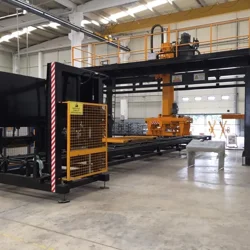
The NBM 5030 can be installed as either a semi-automatic or fully automatic system according to the personnel plan and production targets of the business. The semi-automatic system is suitable for businesses that rely more heavily on personnel support during production. The fully automatic system is suitable for facilities seeking to manage product movement and production flow with fewer personnel.
The automatic and manual operating options allow the operator to select the appropriate control method according to the production process. The automatic operating mode helps repetitive operations run according to the specified program. The manual operating mode allows direct operator intervention during maintenance, adjustment, trial production, and line inspection.
Thanks to the stop, pause, and resume functions, the production line can be managed in a controlled manner. Technical inspection and fault support via the internet contribute to faster evaluation of service requirements.
NBM 5030 Technical Specifications
Hydraulic Operating Pressure: 120-200 bar
Standard Block Capacity: 12 units per pressing cycle
Standard Block Dimensions: 20 × 40 × 20 cm
Interlocking Paving Stone Capacity: 30 units per pressing cycle
System Options: Semi-automatic and fully automatic
Production Method: Pressing onto production pallets
Control Options: Automatic and manual
Machine Handling Option: Forklift handling
Energy Structure: Energy-efficient system
Warranty Period: 4 years in total, consisting of 2+2 years
Technical Support: Fast service, spare parts, and remote connection
User Training: Authorization certificate upon completion of training
Semi-Automatic and Fully Automatic System Comparison
Minimum Total Area: Semi-Automatic: 4,000 m² / Fully Automatic: 4,000 m²
Machine and Equipment Area: Semi-Automatic: 400 m² / Fully Automatic: 600 m²
Drying Area: Semi-Automatic: 2,000 m² / Fully Automatic: 1,600 m²
Finished Product Storage Area: Semi-Automatic: 1,000 m² / Fully Automatic: 1,200 m²
Aggregate Storage Area: Semi-Automatic: 500 m² / Fully Automatic: 500 m²
Empty Pallet Area: Semi-Automatic: 100 m² / Fully Automatic: 100 m²
Required Power Source: Semi-Automatic: 150 kVA / Fully Automatic: 185 kVA
Installed Facility Power: Semi-Automatic: 120 kW / Fully Automatic: 150 kW
Personnel Requirement: Semi-Automatic: 9 people / Fully Automatic: 3 people
The semi-automatic facility requires two operators, one pallet driver, three fresh product handlers, and three aggregate feeders. The fully automatic facility can be operated by two operators and one forklift driver. When selecting the system, not only production capacity but also personnel costs, energy infrastructure, site layout, and long-term growth targets should be evaluated.
Similar Products