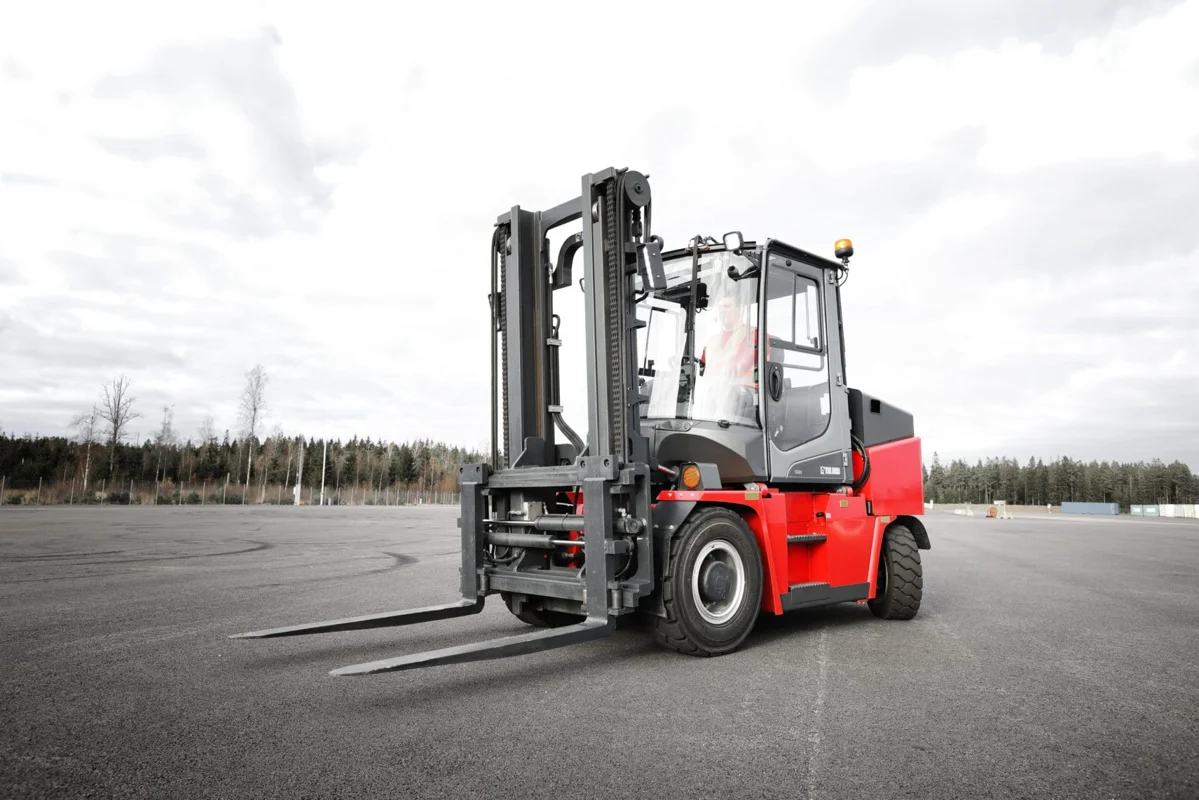
Electric vs Diesel vs LPG Forklifts, Choosing the Right Fuel Type for Your Site
We compare electric, diesel, LPG, gasoline and natural gas forklifts by working environment, refuelling and running cost, with a fuel-specific checklist for used trucks.
In this article · 9 sections
- What should you look at first when choosing a forklift fuel type?
- Which operations are best served by an electric forklift?
- When is a diesel forklift hard to replace?
- How do LPG, gasoline and natural gas forklifts differ?
- How do forklift fuel types compare side by side?
- What should you check on a used forklift for each fuel type?
- How does the fuel decision affect other equipment on site?
- What should you check in person on a used diesel forklift?
- Frequently Asked Questions
A forklift's power source decides where it can work, what it costs to run and how much maintenance it needs. Electric forklifts run quietly with no exhaust in enclosed warehouses, diesel forklifts are strong on heavy loads outdoors, and LPG forklifts offer flexibility between the two. This guide compares electric, diesel, LPG, gasoline and natural gas forklifts by use case.
What should you look at first when choosing a forklift fuel type?
Start with the working environment. Will the truck operate in an enclosed warehouse, a food or pharmaceutical area, or on an open yard, building site or rough ground? Indoors, exhaust gases and noise are serious constraints. Outdoors, gradients, ground conditions and long operating hours carry more weight in the decision.
The second factor is the shift pattern. A single-shift operation and a plant running around the clock have very different refuelling or recharging needs. The third is the weight and frequency of the loads. Fuel type should never be chosen in isolation from capacity and mast height when picking a forklift; capacity and mast selection are covered in our earlier buying guide, so this article focuses only on the power source.
Which operations are best served by an electric forklift?
Electric forklifts produce no local exhaust emissions and run quietly, which makes them the natural choice for enclosed warehouses, cold stores, food, pharmaceutical and retail logistics. They have fewer moving parts than engine-powered trucks, with no oil, filter or exhaust servicing, and their energy cost per hour is usually lower too.
Battery technology is the key decision with an electric forklift. Lead-acid batteries cost less up front but take longer to charge, so multi-shift sites may need spare batteries and a changing routine. Lithium-ion batteries accept opportunity charging and need no watering, but cost more initially. Charging space, electrical supply and remaining battery life are major parts of the total cost. Electric trucks also have limits on rough, sloping outdoor ground.
When is a diesel forklift hard to replace?
Diesel forklifts are a strong choice for open stockyards, building materials, timber, steel and other heavy outdoor handling. They offer high torque, fast refuelling and durability on difficult ground, and they are often the most common option in the heavier capacity classes. Their exhaust emissions, however, make them unsuitable for enclosed spaces.
A diesel forklift carries higher running costs than an electric one because of fuel consumption, engine servicing and regular oil and filter changes. Noise and vibration also affect operator fatigue over a shift. Ventilation and exhaust treatment come up when a diesel truck regularly enters buildings, but if most of the work is indoors the better answer is usually a different fuel type.
How do LPG, gasoline and natural gas forklifts differ?
All three use an internal combustion engine, but their fuels and refuelling methods differ. An LPG truck is refuelled quickly by swapping a cylinder and burns cleaner than diesel. Gasoline forklifts are less common and are often dual-fuel with LPG. Natural gas forklifts are rare because they depend on on-site refuelling infrastructure.
- An LPG forklift can work outdoors and in well-ventilated indoor areas, which suits mixed use. Cylinder storage and changing must follow safety rules, and operators need proper training.
- A gasoline forklift is mostly seen in light and medium capacities and intermittent use; on the used market you will also find units converted to LPG.
- A natural gas forklift only makes sense where a gas refuelling point exists on site; check service and parts availability before committing.
How do forklift fuel types compare side by side?
The table summarises each fuel type by working environment, refuelling method and running cost. It is a relative comparison; actual consumption, charging time and maintenance cost depend on capacity, model and duty cycle. Read it together with your own floor conditions, shift pattern and load profile rather than as a ranking.
| Fuel type | Best environment | Refuelling | Running cost | Watch out for |
|---|---|---|---|---|
| Electric | Indoor warehouse, cold store | Charging | Low | Battery life, charging setup |
| Diesel | Outdoor yard, heavy loads | Fast refuelling | High | Emissions indoors |
| LPG | Mixed use | Cylinder swap | Medium | Cylinder safety, ventilation |
| Gasoline | Light outdoor work | Refuelling | Medium to high | Less common |
| Natural gas | Sites with a gas supply | Gas filling | Variable | Infrastructure and service |
What should you check on a used forklift for each fuel type?
The checklist for a used forklift changes with the power source. On an electric truck the most expensive item is usually the battery and charger; on an engine-powered truck it is the engine, transmission and exhaust. Mast, chains, forks and tyres matter for all. Do not rely on hour meters alone; ask for service records.
- On electric forklifts, check battery age, cell condition and charger compatibility, and run a long test on a fully charged battery if possible.
- On diesel and LPG trucks, check cold starting, exhaust smoke colour and oil leaks.
- On LPG systems, have the regulator, hoses and cylinder connection checked for leaks.
- Look for play in the mast and chains, wear and cracks on the forks and leaks in the hydraulics.
- Test brakes, steering and tyres under load.
A new forklift comes with a warranty, current safety equipment and a service contract. For short-term or seasonal peaks, hiring is also an option; the right choice depends on how long and how intensively the truck will be used.
How does the fuel decision affect other equipment on site?
When a business switches its forklifts to electric, it builds charging infrastructure that other battery-powered machines can share. The same logic applies to other equipment used in the warehouse: emission-free indoors, engine-powered outdoors. Making the decision for the whole site rather than one machine at a time usually lowers overall cost.
Access equipment follows a similar split; we compare battery and diesel models in our guide to aerial work platform types. A clean warehouse floor also extends the life of forklift tyres and the floor itself, which is where our guide to choosing an industrial vacuum comes in.
What should you check in person on a used diesel forklift?
A diesel forklift's condition shows while it works: exhaust smoke on a cold start, engine noise, transmission shifts, mast chain stretch and hydraulic cylinder leaks should be checked on site. Comparing the hour meter with service records and running a lift test with a loaded pallet shows the real condition.
Businesses looking for a machine for outdoor and heavy-duty work can browse diesel forklifts in Istanbul and test the truck in person. If possible, take your own operator for the test drive; the person who will use it every day judges brakes, steering and lift response best.
Frequently Asked Questions
Can an electric forklift be used outdoors?
Yes, on smooth and dry surfaces; some models have outdoor tyres and suitable ingress protection. On rough, muddy or steep ground, engine-powered forklifts are a better fit.
Can an LPG forklift work indoors?
It can be used in well-ventilated indoor areas, but its exhaust emissions are not zero. In food, pharmaceutical and poorly ventilated spaces, an electric forklift is usually the better choice.
Why does a lithium-ion battery cost more than lead-acid?
Lithium-ion batteries are more expensive to produce, but opportunity charging, no maintenance and fewer spare batteries can balance total cost in multi-shift operations.
What matters most when buying a used diesel forklift?
Cold starting, exhaust smoke, transmission response and mast and chain play are the critical checks. If there are no service records, do these checks with a specialist.