#0000877CategoryIndustrial BrushesProduct TypeCylinder BrushBrandBabataşListing TypeFor SaleConditionNewLocationİstanbulEyüpsultanDeliveryIn Stock

- I would like to check availability.
- I would like to know the delivery time.
- I would like to know the payment terms.
- I would like shipping information.
- Is a used option available?
- Is leasing available?
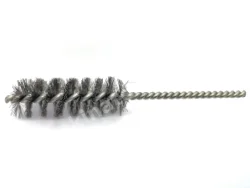
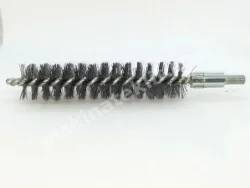
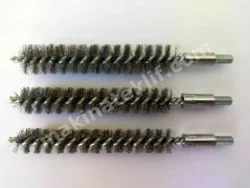
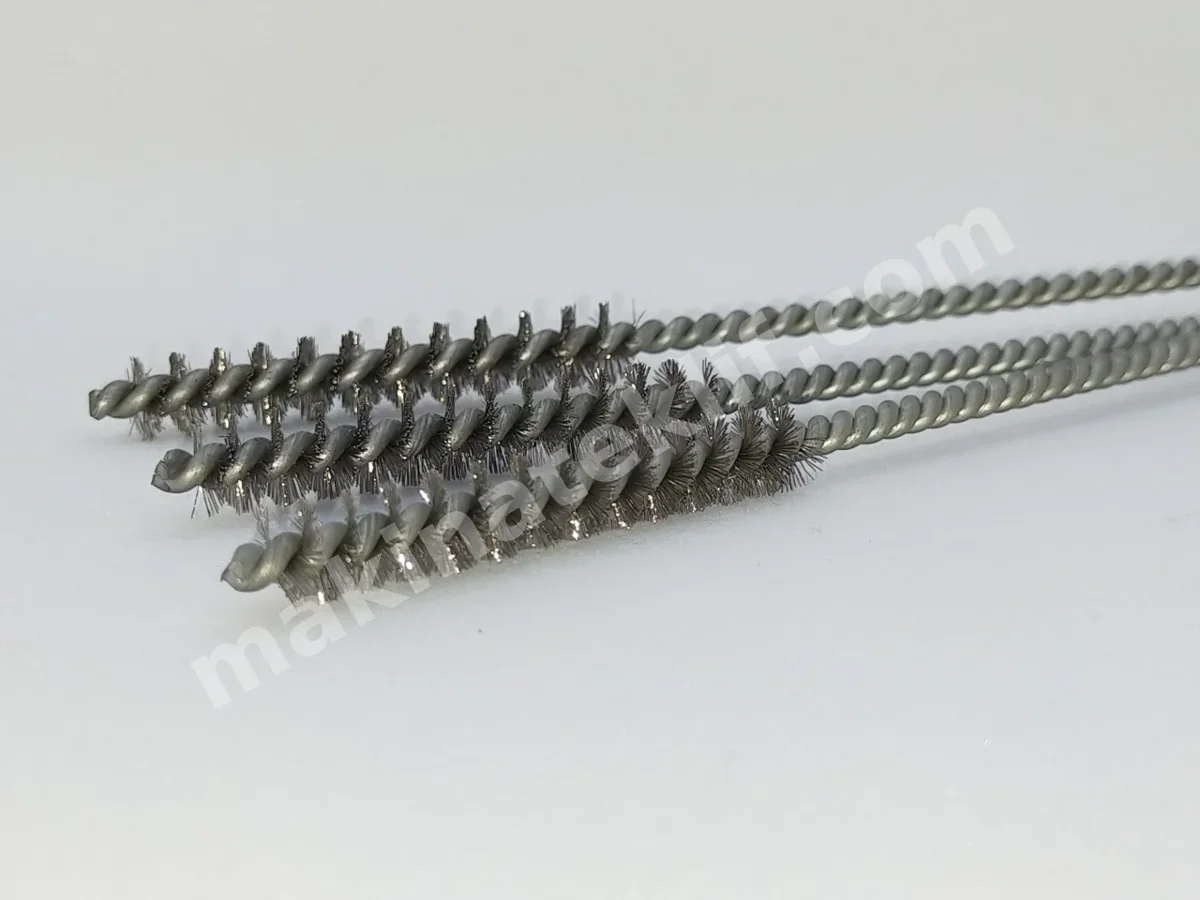
Steel tube cleaning brushes are manufactured to withstand high torque loads and high-speed (RPM) motor-driven applications. During production, five key technical dimensions are considered, together with the brush geometry, material selection, and connection design.
1. Geometric and Technical Dimensions of Steel Tube Cleaning Brushes
Brush Outer Diameter (D₁): Depending on the internal structure of the tube and the application, brushes can be manufactured in diameters ranging from Ø 6 mm to Ø 500 mm. The brush diameter is determined according to the tube's internal diameter and cleaning requirements to ensure suitable contact with the inner surface.
Bristle (Filament) Wire Diameter (d): Determines the cleaning characteristics and level of abrasiveness. Fine wires measuring 0.15-0.25 mm can be used for light rust and soot removal, while thicker wires measuring 0.30-0.60 mm are suitable for removing heavier scale, casting burrs, and hard deposits.
Active Brushing (Bristle) Length (L₁): The section containing the bristles that directly contact the surface being cleaned. For industrial applications, this section is generally designed in lengths ranging from 80-250 mm. The brushing length should be selected according to the tube geometry and cleaning depth.
Overall Body Length (L₂): The total end-to-end length of the bristled section, central core, and connection adapter. Depending on the machine connection and working depth, overall lengths can range from 120-2000 mm.
Core Wire Diameter (d₂): The thickness of the supporting core that compresses the bristles and forms the twisted structure. Depending on the brush dimensions and operating load, the core can be designed using double- or quadruple-twisted steel wire or shaft structures measuring 3.00-8.00 mm.
2. Metallurgical Material Options and Alloy Characteristics
Compatibility between the material of the tube being cleaned and the metallurgical properties of the brush bristles is important for preventing surface damage and unwanted metal contamination.
High-Carbon Steel Wire (Straight / Crimped): Manufactured from high-tensile-strength steel wire. The crimped wire design provides a more flexible brush structure. It can be used to remove carbonized soot and similar deposits from boiler tubes.
Stainless Steel Wire (AISI 302 / 304 / 316): Suitable for food processing, pharmaceutical, and petrochemical facilities, as well as heat exchanger applications requiring appropriate material selection. When the correct grade and manufacturing conditions are used, it helps reduce the risk of transferring free iron particles to the cleaned surface. Brush grade and cleanliness should be selected according to the contamination requirements of stainless steel surfaces.
Knot-Twist (Braided / Twisted) Steel Wire: Manufactured by twisting groups of steel wires around their own axis in a rope-like structure. Its more rigid construction and high mechanical cleaning action make it suitable for removing heavy weld residue, hardened casting burrs, and dense deposits from internal tube surfaces.
3. Advanced Manufacturing Technology and Quality Control Processes
4-Wire, Double Spiral Technology: Standard tube cleaning brushes generally use a two-wire twisted construction, while heavy-duty industrial models can feature four supporting wires twisted together. Under appropriate manufacturing and connection conditions, this design provides high mechanical strength and bristle retention. A design suited to the direction of rotation and operating speed helps reduce the risk of unwinding.
Dynamic Balancing and Surface Finishing: After manufacturing, the brush surface is finished to meet the required dimensions and tolerances. Runout and balance inspections are important for models intended for high-speed machinery. Unbalanced or non-cylindrical brushes can cause vibration, uneven wear, and additional stress on machine components.
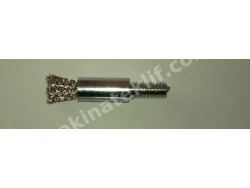
MIG/MAG or Laser-Welded Adapter Integration: Threaded connection adapters such as M6, M12, M16, or 1/2″ NPT can be secured to the body using mechanical crimping or welding methods, depending on the design. In high-torque applications, methods such as MIG/MAG or laser welding can improve connection strength when suitable materials and process conditions are used.
Babataş Harbi Fırça Sanayi
Sakarya Mahallesi Karakol Üstü Sokak No: 13 -15/B, Eyüpsultan, İstanbul, Turkiye