#0000872CategoryIndustrial BrushesProduct TypeCylinder BrushBrandBabataşListing TypeFor SaleConditionNewLocationİstanbulEyüpsultanDeliveryIn Stock

- I would like to check availability.
- I would like to know the delivery time.
- I would like to know the payment terms.
- I would like shipping information.
- Is a used option available?
- Is leasing available?
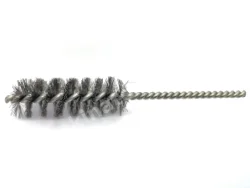
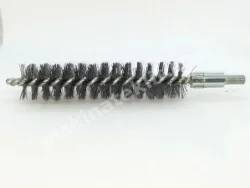
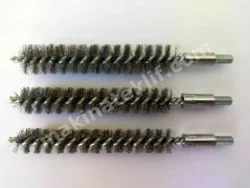
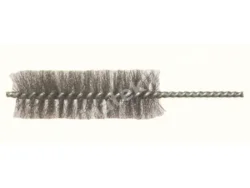
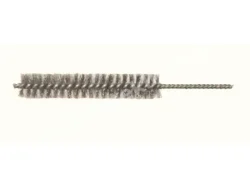
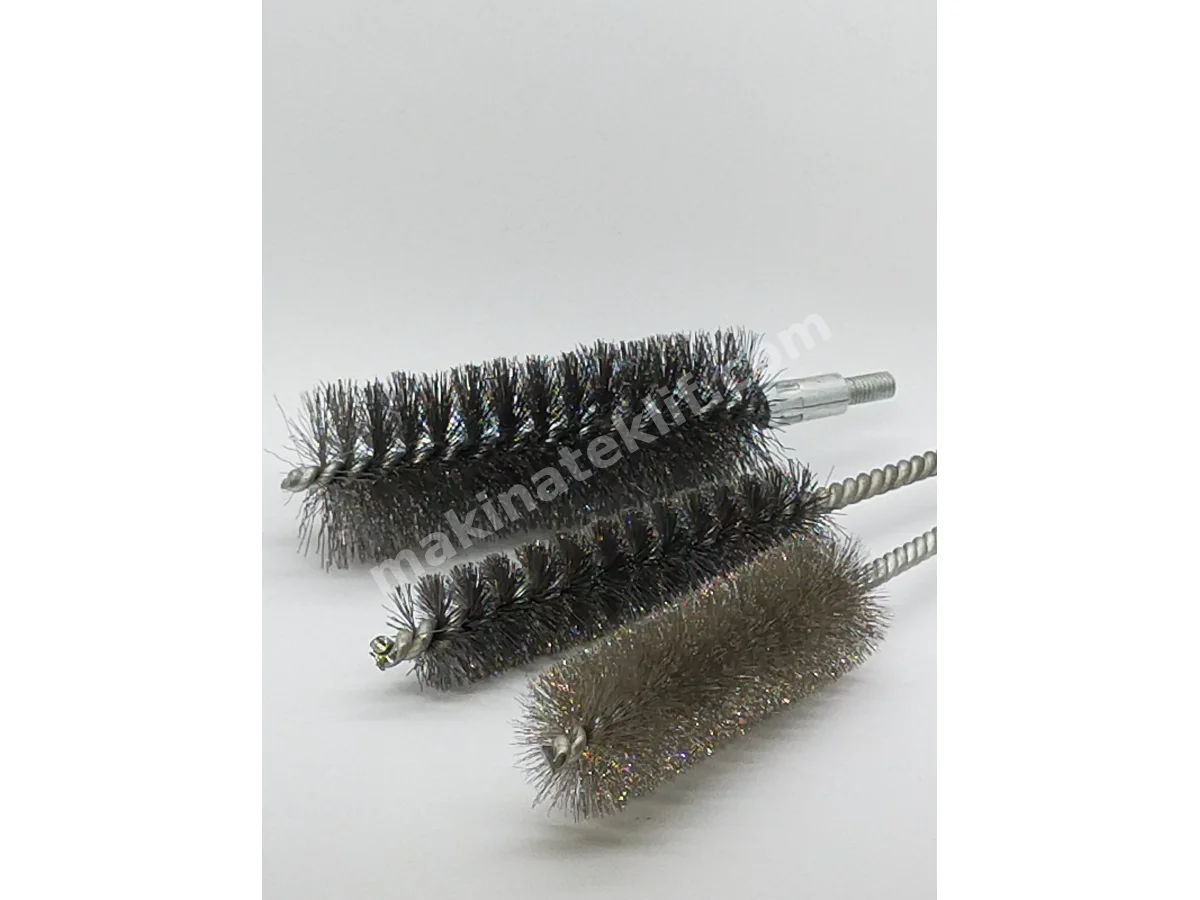
Tube deburring brushes (industrial internal tube deburring brushes) are surface-finishing tools designed to remove sharp burrs and metal residues from the inner walls and ends of metal, alloy, or plastic tubes after cutting, drilling, welding, or tapping operations.
1. Technical Dimensions and Geometric Parameters of Tube Deburring Brushes
For internal tube deburring operations, brush geometry is determined according to the tube's internal diameter, material properties, and manufacturing tolerances.
Brush Outer Diameter (D₁): Depending on the internal diameter of the tube and the application, brushes can be manufactured in sizes ranging from Ø 3 mm to Ø 400 mm. The brush diameter can be designed larger than the tube's internal diameter to provide suitable contact with the inner wall. The required diameter difference should be determined according to bristle material, flexibility, tube geometry, and burr type.
Bristle / Wire Diameter (d): Selected according to burr thickness and tube material. Bristle diameters of 0.10-0.20 mm can be used for delicate aluminum and copper burrs, while 0.25-0.50 mm bristles are suitable for harder steel, seam-welded tube joints, and casting burrs.
Active Brushing (Bristle) Length (L₁): Generally designed within the range of 40-200 mm, depending on the deburring depth and tube geometry.
Overall Body Length (L₂): Depending on integration requirements for robotic arms, CNC turrets, flexible shafts, or pneumatic systems, brushes can be manufactured with an overall length of 90-1500 mm, either as a one-piece body or with an extended shaft.
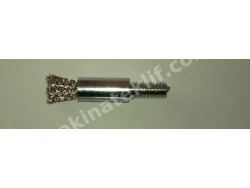
Shaft and Shank Standards: For operation in high-speed industrial machinery with suitable runout and balance values, brushes can be manufactured with smooth cylindrical shafts, 1/4″ hex shanks, or threaded adapters such as M6 and M12. Shaft type and tolerances should be selected according to the machine being used.
2. Hardened Metallic Wire Brushes (Carbon Steel / Stainless Steel / Brass)
Carbon Steel Wire: Used to remove burrs resulting from cutting, welding, and drilling operations in heavy-duty steel tubes, as well as scale from internal tube surfaces. Wire diameter and hardness should be selected according to the amount of burr buildup and the surface being cleaned.
Stainless Steel Wire (AISI 302 / 304 / 316): Suitable for stainless steel and titanium tube systems. The correct wire grade and clean manufacturing conditions help reduce the risk of transferring free iron particles to the surface during cleaning. For contamination-sensitive applications, the brush material grade and usage history should also be considered.
Brass and Phosphor Bronze Wire: Used for deburring the internal surfaces of aluminum, copper, and brass tubes with lower abrasiveness. Selecting the appropriate wire diameter and brushing pressure can help reduce the risk of scratching and material loss. These materials generally produce fewer sparks than steel wire; however, additional assessment is required for applications with specific spark-safety requirements.
3. Advanced Manufacturing Technology and Quality Details
Double Spiral - Heavy Duty Winding: For models designed to withstand high mechanical loads, the supporting body can feature a double-spiral or four-wire twisted construction. Twisting four supporting wires together can improve body strength and bristle retention when suitable manufacturing and connection conditions are used. Clockwise (CW) and counterclockwise (CCW) operation must be specified according to the brush design.
Dense Fill Control: Bristle density per centimeter is adjusted according to the burr type and chip evacuation requirements. Dense winding can be preferred for fine burr removal. For tubes containing heavy casting chips or larger residues, wider-pitch spiral designs can help facilitate chip removal.
CNC and Robotic Automation Integration: In addition to handheld drills, brushes can be manufactured with dimensions and connections suitable for industrial robotic arms and CNC machining centers. For integration with automatic tool changing (ATC) systems, shaft dimensions, connection tolerances, and balance values must be determined according to the machine manufacturer's requirements.
Babataş Harbi Fırça Sanayi
Sakarya Mahallesi Karakol Üstü Sokak No: 13 -15/B, Eyüpsultan, İstanbul, Turkiye