Specialty Printing Methods Compared, Rotogravure, Screen, Pad, UV and Hot Foil
We compare rotogravure, screen, pad, UV, hot foil and letterpress printing by substrate, tooling cost and run length, plus the guillotines, die cutters and slitters that follow the press.
In this article · 10 sections
- Where should the choice of a specialty printing method start?
- When is rotogravure printing the right choice?
- How does screen printing differ from pad printing?
- When do you need a UV printer or a large format printer?
- Where are hot foil stamping and letterpress still used?
- How do the specialty methods compare side by side?
- Which cutting machine do you need after printing?
- Should you buy a new or a used specialty printing machine?
- How should you filter listings to test a specialty printing machine in person?
- Frequently Asked Questions
Offset, digital and flexo presses cover most commercial print, but not everything. Rotogravure dominates long-run flexible packaging, screen printing handles glass and textiles, pad printing reaches curved plastic parts, UV printing goes straight onto rigid boards and hot foil stamping adds the finishing shine. This guide compares these specialty methods and the cutting machines that follow them.
Where should the choice of a specialty printing method start?
Start with the surface. Is the job flat paper or film, a thick rigid board, or a curved object such as a cap, pen or bottle? The substrate narrows the options more than anything else. Next comes run length, because methods with expensive cylinders or plates only pay off over long runs.
The third question is the ink layer. Some jobs need a thin, sharp image; others need a thick deposit you can feel or a metallic gloss. The specialty methods in the printing machines category answer different combinations of these three questions. Judge each one on plate, ink and make-ready costs as well as the machine price, because those running costs decide the real cost per print.
When is rotogravure printing the right choice?
Rotogravure carries the image as tiny cells engraved into a metal cylinder. The cells fill with ink and transfer it directly to the substrate. Cylinder making is expensive and slow, but once the cylinders exist the process delivers consistent colour and high speed over very long runs, which is exactly where its economics work.
That is why a rotogravure printing machine is mainly found in flexible packaging film, decor paper and designs that stay unchanged for a long time. For short runs and frequent artwork changes, cylinder cost pushes up the unit price, and flexo or digital is more flexible. On a used gravure line, the number of units, the drying tunnels, solvent extraction or recovery and the condition of the cylinder stock matter as much as the asking price.
How does screen printing differ from pad printing?
Screen printing pushes ink through a stencil on a tensioned mesh with a squeegee, leaving a thick, opaque layer on glass, metal, plastic sheet or fabric. Pad printing picks the image up from an etched plate with a soft silicone pad and transfers it onto curved, recessed or irregular surfaces that a screen cannot reach.
Put simply, a screen printing machine suits large areas on flat or cylindrical items, while a pad printing machine suits fine detail on small, oddly shaped parts. Pen barrels, bottle caps, toys and medical plastic components are classic pad printing work. Screens need stencils and pad printers need plates, and in both cases every extra colour adds a station and often a drying step.
When do you need a UV printer or a large format printer?
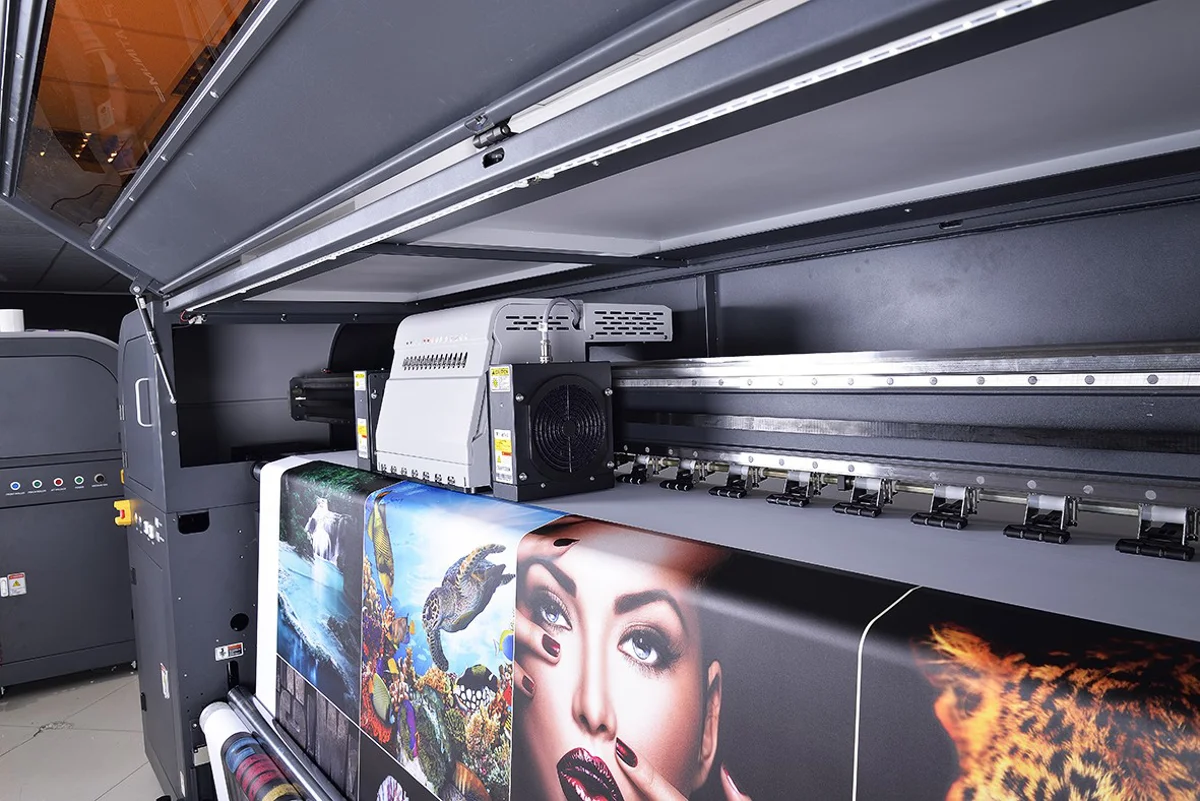
UV printing cures the ink instantly under ultraviolet light, so it works on non-absorbent surfaces and the print can be handled straight away. Flatbed models print directly onto wood, glass, acrylic, composite panels and metal. Large format printers, by contrast, are built for oversized output such as posters, banners and signage on rolls or boards.
A UV printer needs no plates, which makes short runs viable for sign makers, interior decor workshops and personalised product businesses. When choosing a large format printer, print width, ink type and roll or board feeding drive the decision. On used machines the printheads are the most uncertain cost: their wear and the availability of replacements can change the value of the deal considerably.
Where are hot foil stamping and letterpress still used?
Hot foil stamping uses a heated die to press metallic or coloured foil onto the surface, with no ink at all. It gives cosmetic and spirits packaging, invitations, labels and leather goods a premium finish. Letterpress prints from a raised relief plate; it is old, but remains useful for numbering and embossing work.
A hot foil stamping machine usually runs as a separate station after the main print and is often combined with embossing. A letterpress printing machine is used today mainly for numbering, perforating, simple die cutting and handcrafted-look specialty jobs. In both processes the cost of dies and the consistency of temperature and pressure settings decide the final quality.
How do the specialty methods compare side by side?
The table below summarises each method by typical substrate, tooling needs and the run length where it is usually economical. It is a relative comparison only; actual speeds, sizes and costs vary by model, number of colours and the job itself. Read it against your own product surfaces and annual order pattern before deciding.
| Method | Typical substrate | Tooling or make-ready | Economical run |
|---|---|---|---|
| Rotogravure | Flexible film, decor paper | Engraved cylinders, high cost | Very long |
| Screen printing | Glass, textile, sheet, bottles | Mesh stencil | Short to medium |
| Pad printing | Small curved parts | Etched plate and pad | Medium to long |
| UV printing | Rigid board, glass, wood | None | One-off to medium |
| Hot foil stamping | Board, labels, leather | Heated die | Medium to long |
| Letterpress | Paper, board | Relief plate | Short, specialty |
Which cutting machine do you need after printing?
Printed work rarely leaves the shop uncut. The right cutter depends on the product: stacks of flat sheets, bound books and magazines that need trimming, box blanks that need die cutting, or wide reels that must be split into narrow rolls. The machines in the paper cutting machines category are organised around exactly these needs.
- A guillotine paper cutter cuts stacked sheets in straight lines and is the basic cutter of any print shop. On a used one, check the blade and the safety equipment first.
- A three-knife trimmer trims three edges of bound books and magazines in one cycle.
- A die cutting machine and a cutting and creasing machine cut and score carton, label and packaging blanks.
- A slitter rewinder splits wide reels into narrow rolls and is common after gravure or flexo printing of flexible packaging.
Converting lines for paper cups, paper bags and similar products are covered in our guide to paper and board converting machines.
Should you buy a new or a used specialty printing machine?
Mechanically robust screen, pad, foil and letterpress machines can run for many years, so buying them used is common. Machines built around printheads, UV lamps and electronic controls carry more wear and spare-parts risk. The right answer depends on the machine type and on whether reliable service support is available locally.
When inspecting a used machine:
- Ask for a test print and check registration, meaning how accurately the colours line up.
- Confirm whether job-specific items such as cylinders, plates, screens or pads come with the machine.
- On digital and UV printers, ask about printhead age, lamp hours and whether the software licence transfers.
- See the drying, extraction and safety equipment working.
A new machine comes with a warranty, current software and installation training, which is valuable when you are entering a new line of business.
How should you filter listings to test a specialty printing machine in person?
With specialty printing methods, quality depends heavily on the substrate. Colour consistency, registration accuracy and ink drying on film, board or plastic parts only show in a test print with your own material. The condition of costly parts such as cylinders, plates and anilox rolls should also be checked at the machine.
In Istanbul, where printing and packaging industries sit side by side, printing machines in Istanbul let you see different methods side by side. For flexo, which stays economical on shorter runs than gravure and is common in flexible packaging, go straight to flexo printing machines in Istanbul; during the test print, ask about anilox cell condition and the drying unit.
Frequently Asked Questions
What is the main difference between rotogravure and flexo?
Rotogravure prints from engraved cylinders and flexo from flexible relief plates. Gravure cylinders are costly but extremely consistent over very long runs; flexo plates are cheaper, so flexo is more flexible for medium runs and frequent design changes.
How do you print on a curved part?
Pad printing handles small irregular surfaces, while screen printing or UV printing with a rotary fixture handles cylindrical items such as bottles and cups. The choice depends on the shape and the level of detail required.
Is a separate machine needed for hot foil stamping?
Some printing lines include a foil unit, but most shops foil on a separate machine after the main print, which keeps scheduling flexible.
What is the biggest risk with a used UV printer?
Worn printheads and the availability of replacements. Ask for a test print and documentation of head condition before you buy.